IIFYM and Flexible Dieting: What It Is and How It Works
IIFYM, short for if it fits your macros, is an approach where you set daily targets for protein, carbohydrate and fat, then choose any foods that fit. It is also called flexible dieting or the macro diet. Protein stays fixed, and calories decide whether you lose, hold or gain weight. For a 70 kg woman at 2,044 calories the targets are 112 g protein, 246 g carbohydrate and 68 g fat.
This page explains how IIFYM works day to day and how to calculate your macros for it. It includes a sample day in grams, a foods-by-macro table, a treat swap example and a fibre checklist, because flexibility does not remove the need for food quality. To set your targets, use the free macro calculator.
What Is IIFYM?
IIFYM means that no food is off limits as long as your daily grams of protein, carbohydrate and fat are met. The approach spread through bodybuilding forums and coaching communities, where lifters wanted a rule that was more flexible than a fixed meal plan. It is better described as a way of tracking than as a diet, because it says how much to eat and not what to eat.
The idea rests on a simple point. Calories decide weight change, and protein is the macro with the strongest evidence for protecting muscle. Within those two limits, many foods can fit. The basics of each nutrient are in what are macros.
Flexibility has limits. A day built only from foods that fit the macros can still miss fibre, vitamins and minerals. That is the main criticism of the approach, and the later sections show how to deal with it.
Flexible Dieting vs Macro Diet vs Counting Calories
The terms overlap, and most pages treat them as one thing. They are close, but they are not identical, and the difference is useful when you plan your tracking.
Term | What it tracks | Typical use |
|---|---|---|
IIFYM | Protein, carbohydrate and fat in grams | Fixed daily targets, any foods that fit |
Flexible dieting | Calories and macros, with a food-quality rule | The same plan with an 80/20 or similar guideline |
Macro diet | Macro percentages or grams | Often a set ratio with a food list |
Counting calories | Calories only | Total energy, with no protein target |
The first two are close enough to treat as one method on this page. The macro diet is a looser label that often includes a fixed ratio, and calorie counting has no protein target. The extra step that sets it apart is the protein number.
How to Calculate Your Macros for IIFYM
The calculation has four steps, and it is the same method used across this site. The full walkthrough is in how to calculate macros, and the energy basics are in BMR and TDEE.
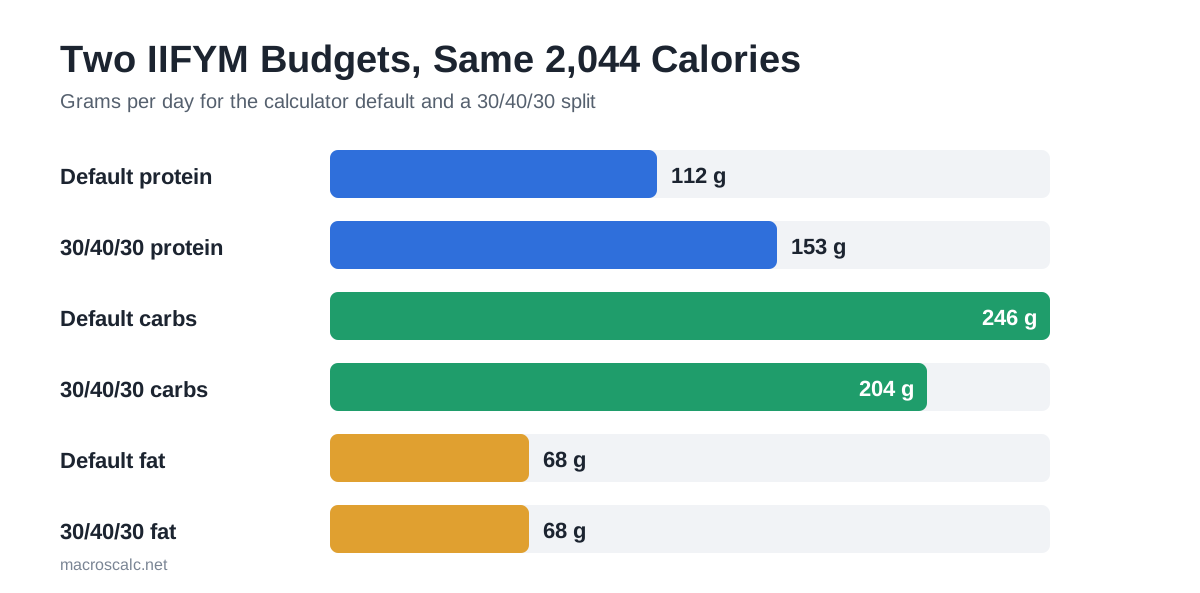
For the 70 kg woman, maintenance is 2,044 calories. Protein at 1.6 g per kg is 112 g, fat at 30% of calories is 68 g and carbohydrate is the remaining 246 g. Those three numbers are the day’s budget.
Many people prefer to start from a ratio. A 30/40/30 split at the same calories gives 153 g protein, 204 g carbohydrate and 68 g fat. Both budgets are on plan, because they provide the same 2,044 calories. Macro ratios explained shows how to compare them.
How Flexible Dieting Works in Practice
Each day starts with a budget and ends with a check. You log what you eat, compare the totals with the targets and fill the gaps with the foods you have left. Protein is usually planned first, because it is the hardest to reach, and fat and carbohydrate are adjusted around it.
Many people plan the meals early in the day and leave a flexible portion for the evening. A common guideline is to take most calories from whole, nutrient-dense foods and the rest from foods you enjoy. That split is often called the 80/20 rule, and it is a quality guide, not a macro target.
The tracking routine is covered in how to count macros. Weighing foods in grams is more accurate than estimating, especially for oils, nut butters and grains, where small errors add up quickly.
Foods by Macro
Hitting a macro target is easier when you know which foods carry which nutrient. The table lists common choices with grams of the main macro per serving, rounded from USDA FoodData Central. Values vary by brand and preparation.
Main macro | Food | Serving | Approx. amount |
|---|---|---|---|
Protein | Chicken breast, cooked | 100 g | 31 g protein |
Protein | Greek yogurt, plain nonfat | 170 g | 17 g protein |
Protein | Lentils, cooked | 1 cup | 18 g protein |
Carbohydrate | White rice, cooked | 1 cup | 45 g carbohydrate |
Carbohydrate | Rolled oats, dry | 40 g | 27 g carbohydrate |
Carbohydrate | Sweet potato, baked | 1 medium | 27 g carbohydrate |
Fat | Olive oil | 1 tbsp | 14 g fat |
Fat | Almonds | 28 g | 14 g fat |
Fat | Avocado | Half | 15 g fat |
Many foods carry two macros, so use the table as a guide. Lentils give protein and carbohydrate, and almonds give fat and some protein. Building meals from several of these makes it easier to land close to all three numbers.
A Sample Day at 2,044 Calories
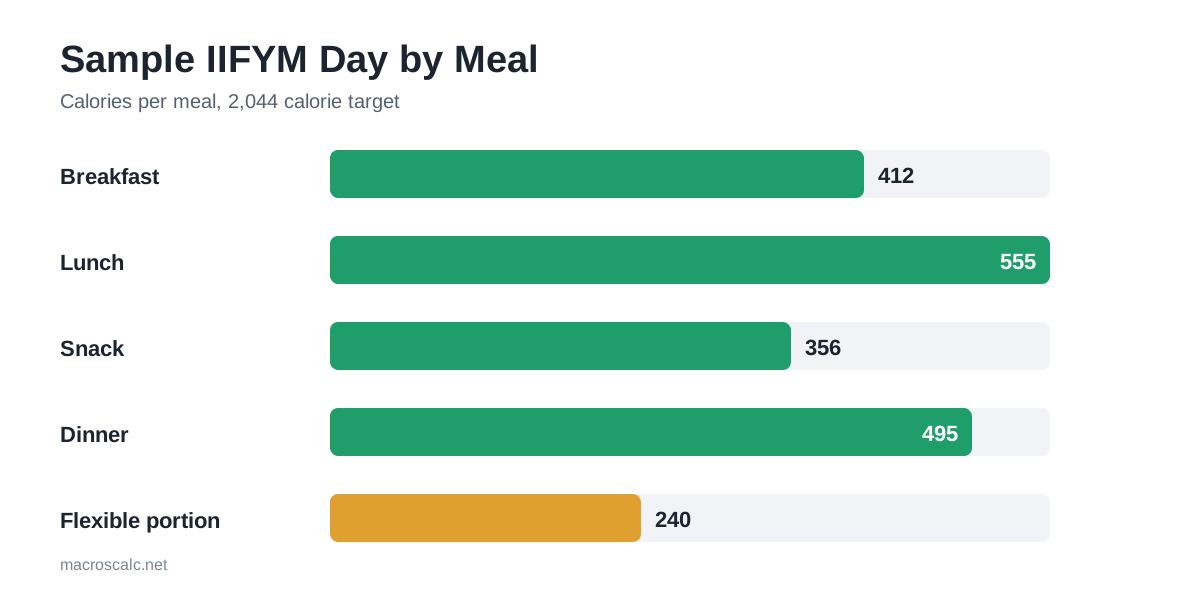
The table builds one day for the 70 kg woman, with approximate values from USDA FoodData Central. It uses whole foods for most of the day and a flexible portion at the end. The total lands within about 5% of every target.
Meal | Foods | Calories | Protein | Carbohydrate | Fat |
|---|---|---|---|---|---|
Breakfast | Oats 60 g dry, banana 120 g, 1 egg | 412 | 18 g | 67 g | 9 g |
Lunch | Chicken 120 g, rice 200 g cooked, broccoli 150 g, olive oil 5 g | 555 | 46 g | 67 g | 11 g |
Snack | Greek yogurt 170 g, almonds 28 g, apple 180 g | 356 | 24 g | 37 g | 15 g |
Dinner | Salmon 110 g, sweet potato 200 g, olive oil 10 g | 495 | 28 g | 41 g | 24 g |
Flexible | Two cookies, 50 g | 240 | 2 g | 32 g | 12 g |
Day total | 2,058 | 118 g | 244 g | 71 g | |
Target | 2,044 | 112 g | 246 g | 68 g |
The day is on plan even though 240 calories came from cookies. Protein is 6 g over target, carbohydrate is 2 g under and fat is 3 g over, which is well inside normal tracking error. The flexible portion fit because the other meals left room for it.
Worked Examples: An 80/20 Day and a Treat Swap
These examples show the logic of a flexible plan using the same 2,044 calorie budget. They take the arithmetic one step beyond the sample day.
Example A: The 80/20 Guideline
Applied to 2,044 calories, an 80/20 split gives 1,635 calories from whole-food targets and 409 calories of flexible foods. The flexible share is a guide, not a requirement. Many people use less, and a smaller flexible share leaves more room for fibre and micronutrients.
Example B: Fitting a 300 Calorie Treat
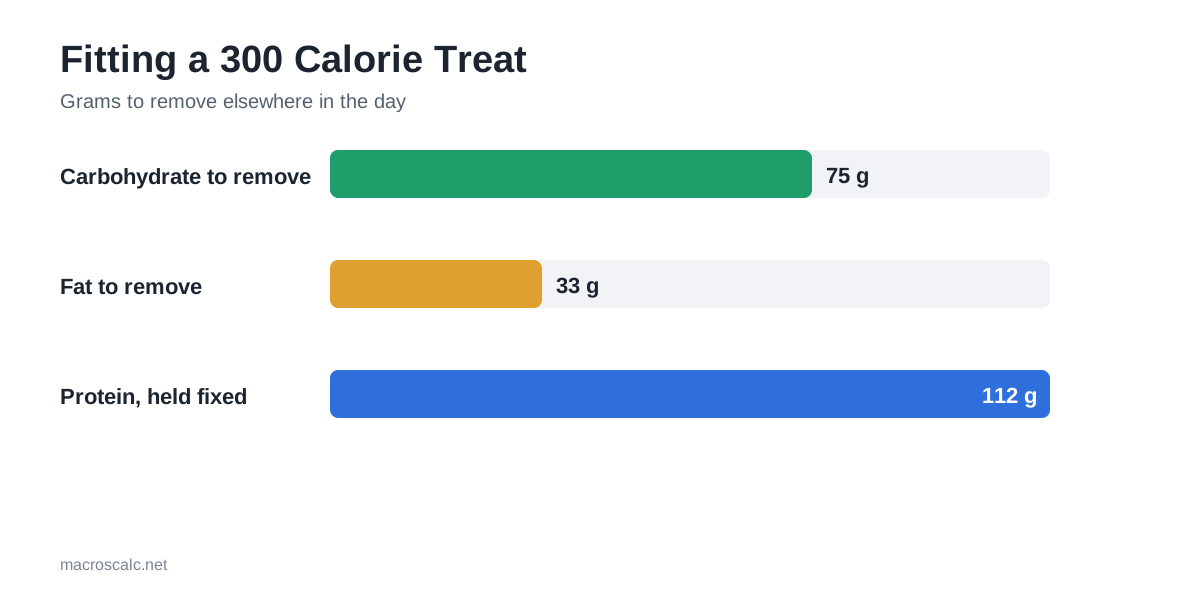
A 300 calorie dessert has to come from somewhere in the day’s budget. Remove 75 g of carbohydrate (300 ÷ 4) elsewhere, or about 33 g of fat (300 ÷ 9), and keep protein at 112 g. The grams are the budget, so the treat is a swap, not a failure.
Choose the swap that leaves the day’s meals most satisfying. For most people that means giving up starchy carbohydrate such as extra rice or bread, not protein.
Where IIFYM Helps and Where It Falls Short
The approach has real strengths and real weaknesses. The sections below weigh them evenly, so you can judge whether it fits you.
Benefits
The main benefit is adherence. A plan with no forbidden foods is easier to follow socially and avoids the all-or-nothing cycle that ends many diets. It also teaches portion sizes and the macro content of food, which is useful even if you stop tracking later.
Downsides
The main risk is nutrient quality, because macros say nothing about fibre, vitamins and minerals. Tracking also takes time, and it can encourage rigid behaviour in some people. The plan does not account for medical conditions, so it needs adapting for them.
Fibre and Micronutrients: A Checklist for Flexible Dieting
Meeting protein, carbohydrate and fat does not guarantee a healthy day. The checklist below covers the gaps that macro tracking most often misses. It takes little extra effort once it becomes a habit.
If your plan hits the macros but misses fibre, swap some refined carbohydrate for oats, beans, fruit or vegetables. The macros change very little, and the gain in nutrients is large.
Troubleshooting Common Flexible Dieting Problems
Most problems with a flexible plan are small and fixable. The table lists the common ones, the usual cause and the first fix.
Problem | Likely cause | Fix |
|---|---|---|
Cannot hit protein | Meals are carbohydrate-heavy | Plan protein first and add a protein food to each meal |
Always over on fat | Oils and nut butters not weighed | Weigh them in grams |
Weight is not changing | Calories are off | Change calories by 100 to 150 |
Hungry all day | Low fibre or low protein | Add vegetables, beans or more protein |
Eating out breaks the plan | Unknown portions | Estimate with similar foods and log it anyway |
Treat the table as a checklist, not a rule book. If two problems appear together, such as low protein and constant hunger, fix protein first because it tends to solve both. If the problem persists for more than two to three weeks, review calories before you change the macro split.
How to Interpret Hitting Your Numbers
Hitting your numbers is a means, not an end. A day within about 5% to 10% of every target is on plan, and the weekly average matters more than any single day. If you miss one day, carry on the next day without trying to compensate.
Judge the plan by your weight trend, your energy and your training over two to three weeks. If those match your goal, the numbers are working. If not, adjust calories first, and change the split only if a specific problem points to it.
Who Should Skip Macro Tracking
Tracking food in detail is not right for everyone. People with a history of disordered eating should avoid it unless a clinician advises otherwise, because logging can reinforce restriction. Research on food-tracking apps has linked them with eating-disorder symptoms in some users.
It also needs adapting for people with diabetes, kidney disease or other medical conditions, who should work with a clinician or registered dietitian. The numbers here are estimates for healthy adults.
FAQs
Conclusion
IIFYM works because it sets calories and protein and then leaves room for food you enjoy. Calculate your macros with the same method as any plan, plan protein first and check fibre and micronutrients so flexibility does not become poor nutrition. Keep the plan only as long as it helps.
To set your own targets, use the macro calculator. If you want to read about splits, see macro ratios explained, and for the tracking routine see how to count macros.
Sources
The figures on this page come from the sources below and from USDA FoodData Central for food values. Check the originals if you plan to rely on a specific number.
Every worked example was calculated with the same engine the macro calculator uses. The sample day uses rounded USDA values and is approximate.