Macros for Body Recomposition: Protein, Carbs and Fat
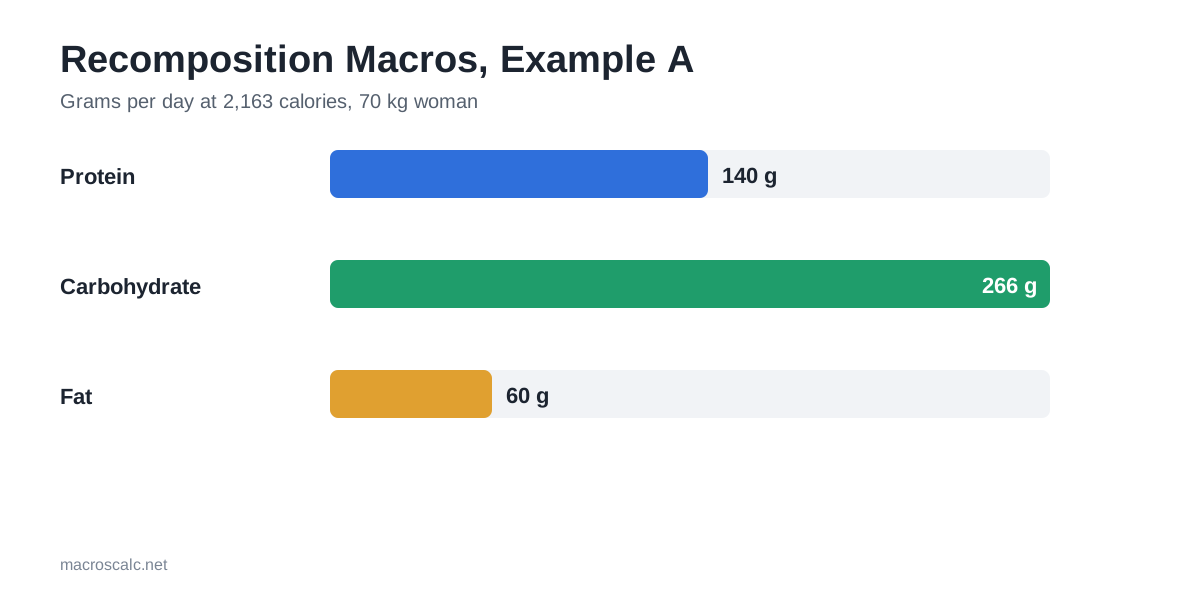
Macros for body recomposition aim to build muscle and lose fat at the same time. Calories sit near maintenance, protein is set high at about 2.0 g per kg and training is progressive. Carbohydrate takes most of the remaining calories and fat stays near 25%. For a 70 kg woman that is 2,163 calories with 140 g protein, 266 g carbohydrate and 60 g fat.
This page explains how recomposition works and who it suits. It gives three worked profiles from the calculator, a protein table that reconciles grams per lb with grams per kg, and a way to read progress when the scale barely moves. To set your own numbers, choose the recomposition goal in the free macro calculator.

What Is Body Recomposition?
Body recomposition means losing fat and gaining muscle over the same period, so your weight can stay almost flat while your shape changes. It differs from a cut, which aims at fat loss, and from a gaining phase, which accepts some fat gain for faster muscle growth. A recomp trades speed for doing both at once.
If you would rather gain with a surplus, see macros for muscle gain.
A 2020 review by Barakat and colleagues found that recomposition has been documented even in resistance-trained people, and named progressive resistance training and evidence-based nutrition as the two key factors. In practice, it tends to come fastest for beginners, people returning to training and people with more body fat to spend, and to slow in lean, experienced lifters. That gradient is practitioner experience, not a finding of the review. Resistance training and a high protein intake are the two inputs that every successful case shares.
The practical difference is the scale. In a cut it falls, in a gaining phase it rises, and in a recomp it barely moves. That is why macros for body recomposition need different progress checks, covered further down.
Macros for Body Recomposition: What Changes
The setup is closer to maintenance than to a diet. Calories are set at your maintenance level, protein is raised to 2.0 g per kg, fat stays near 25% of calories and carbohydrate fills the remainder. The calculator’s recomposition goal applies exactly this setup.
Compared with the maintain goal, the main change in macros for body recomposition is protein, which rises from 1.6 to 2.0 g per kg. The extra protein supports muscle repair while calories are not in surplus. The calorie step uses the same method as how to calculate macros, and the energy basics are in BMR and TDEE.
Why Calories Stay Near Maintenance
Building muscle takes energy and protein, and losing fat takes stored energy. At maintenance, food supplies the protein and most of the energy, and stored body fat can top up the rest. In a large deficit muscle building stalls. In a large surplus fat gain speeds up. The middle is where macros for body recomposition aim to work.
The mechanism is plausible rather than guaranteed for every person. Some people sit a little under maintenance, by 100 to 200 calories, and some a little over. Most guides treat anything within a narrow band of maintenance as recomposition. The wider the gap, the more the plan turns into a cut or a gain.
Who Recomposes Well
Recomposition is not equally efficient for everyone. Starting point matters more than the macro split. The table shows where it works best and what to do if you fall outside it.
Starting point | Recomp fit | Better alternative |
|---|---|---|
Complete beginner to lifting | Very good fit for macros for body recomposition, muscle builds quickly | None needed |
Returning after a break | Very good, lost muscle returns fast | None needed |
Intermediate with higher body fat | Good, fat provides the energy | Cut first if the aim is fat loss |
Lean, experienced lifter | Slow, gains are small | Lean gaining phase, see macros for muscle gain |
Mainly wants fat loss | Poor fit, deficit is faster | Deficit, see macros for weight loss |
If you fall in the first three rows, recomposition is a sensible goal. If you are lean and experienced, a dedicated gaining phase followed by a short cut often produces more visible change in the same time. Choose the plan that matches your priority, not the one that sounds most efficient.
Protein, Fat and Carbs for Recomp
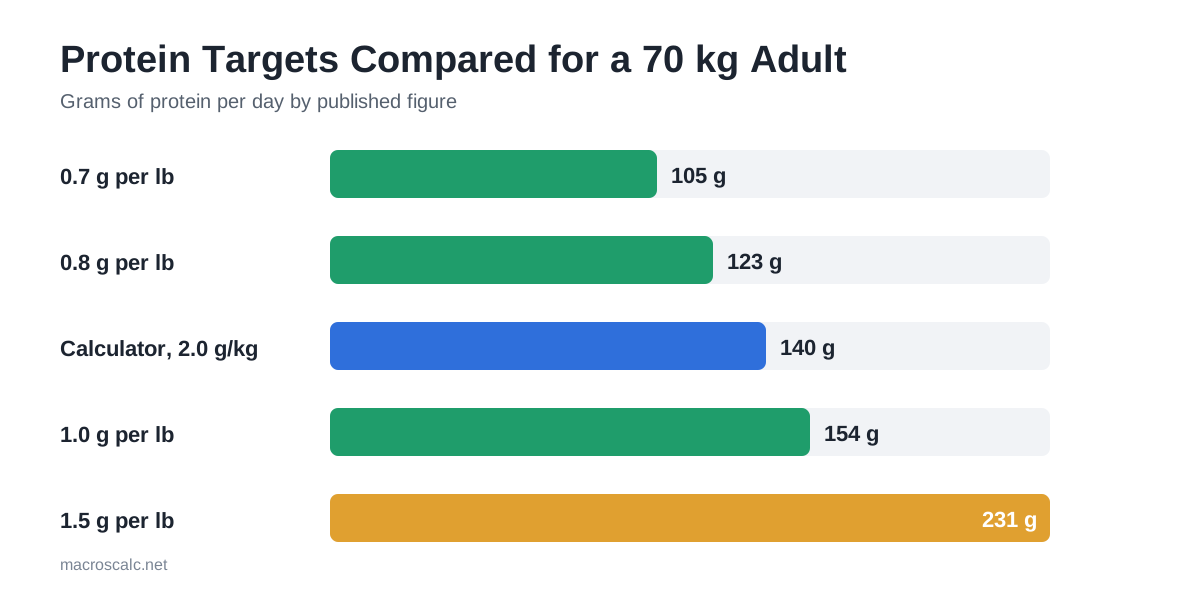
Protein is the main lever, and published figures vary a lot because they use different units. Some pages quote grams per lb of body weight, some grams per kg and some per lb of lean mass. The table converts the common values for a 70 kg adult so you can compare them.
Protein: Reconciling Grams per lb and Grams per kg
The table converts the protein figures behind macros for body recomposition to one scale, grams per kg, so they can be compared directly. Read across a row to see what the published number means for a 70 kg adult.
Figure as published | Grams per kg | Grams per day, 70 kg adult |
|---|---|---|
0.7 g per lb | 1.5 g/kg | 105 g |
0.8 g per lb | 1.8 g/kg | 123 g |
Calculator recomp default, 2.0 g/kg | 2.0 g/kg | 140 g |
1.0 g per lb | 2.2 g/kg | 154 g |
1.5 g per lb | 3.3 g/kg | 231 g |
The range from 0.7 to 1.0 g per lb is the same as 1.5 to 2.2 g per kg, and it sits inside the evidence-supported band. The 2018 Morton meta-analysis found gains plateau near 1.6 g per kg, with an upper confidence limit of 2.2 g per kg. A figure of 1.5 g per lb is more than twice the plateau point and has no added support.
The calculator default of 2.0 g per kg is a high-normal choice that gives margin while calories are not in surplus. The reasoning behind the range is in how much protein per day.
Fat and Carbohydrate
Fat is set near 25% of calories, with a floor of 0.6 g per kg. That keeps hormone-supporting fat in the diet without crowding carbohydrate, which fuels training. Carbohydrate takes the remainder of the macros for body recomposition and usually ends up between 3 and 4.5 g per kg in the examples below.
For gram targets by calorie level, see how many carbs per day and how many grams of fat per day.
If you prefer to place more carbohydrate around hard sessions, the training and rest day option in carb cycling keeps the weekly average at maintenance. It is optional, and the plain version works fine.
Training and Recovery Notes
Macros do not build muscle without a stimulus. Resistance training three or more days a week, with progressive overload on the main lifts, is the part of recomposition that cannot be replaced. This page does not give a programme, only the principle: add reps or load over time.
Sleep, daily steps and stress also affect results. Short sleep makes hunger harder to manage and recovery slower, and low daily movement can erase a small calorie gap. None of these changes the macros for body recomposition, but they often explain a stalled recomp.
Macros for Body Recomposition: Example Splits for Three Profiles
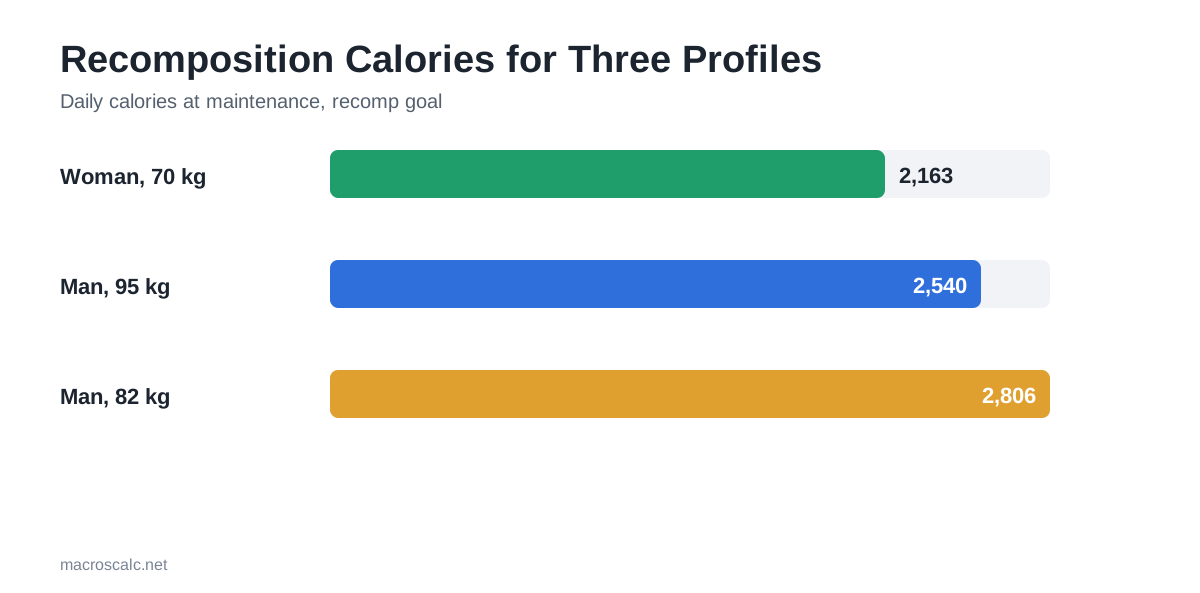
These examples run the calculator’s recomposition goal with 2.0 g per kg protein and 25% fat. Each shows calories, grams and an interpretation. All three sit at maintenance by design.
Profile | Calories | Protein | Carbohydrate | Fat |
|---|---|---|---|---|
A: woman, 35 y, 165 cm, 70 kg, activity 1.55 | 2,163 | 140 g | 266 g | 60 g |
B: man, 28 y, 180 cm, 82 kg, activity 1.55 | 2,806 | 164 g | 362 g | 78 g |
C: man, 45 y, 178 cm, 95 kg, 28% body fat, activity 1.375 | 2,540 | 190 g | 286 g | 71 g |
Example A: 70 kg Woman
Maintenance for this profile is 2,163 calories. Protein at 2.0 g per kg is 140 g, fat at 25% is 60 g and carbohydrate is the remaining 266 g. Protein is 26% of calories, carbohydrate 49% and fat 25%.
Example B: 82 kg Man
His maintenance level is 2,806 calories, so protein at 2.0 g per kg is 164 g, fat is 78 g and carbohydrate is 362 g. Protein is 23% of calories because his calories are higher, even though the grams per kg match. Percentages shift with calories while grams per kg stay fixed.
Example C: 95 kg Man With Body Fat Entered
A 45-year-old at 178 cm and 95 kg, with 28% body fat and an activity factor of 1.375, gets 2,540 calories with 190 g protein, 286 g carbohydrate and 71 g fat. Without body fat, the calculator gives 2,533 calories with 190 g, 285 g and 70 g. The two methods agree closely, so entering body fat changes little for this profile.
Protein is 2.0 g per kg of total body weight here, which makes it 30% of calories. If the aim is to avoid very high totals in heavier people, some coaches base protein on a goal weight or on lean mass instead.
How to Interpret Progress When the Scale Barely Moves
A flat scale is the expected outcome of macros for body recomposition, so judge progress on several measures at once. Weekly average weight tells you calories are about right. Waist, strength and photos tell you what the weight is made of.
Measure | How to track it | What progress looks like |
|---|---|---|
Weekly average weight | Weigh most mornings, compare weekly averages | Flat or drifting slowly within normal noise |
Waist | Tape at the navel, same time of day, every one to two weeks | Trending down while weight is flat |
Strength | Log main lifts and reps | Reps or load rising over four to eight weeks |
Photos | Same light and pose, every four weeks | Visible change in shape |
Body-fat scan | DEXA or similar, every three to four months, optional | Fat mass down and lean mass up, within the method’s error |
Each single measure is noisy. Trust the pattern across them, not any one reading. Weight flat with a shrinking waist and rising lifts is the clearest sign that recomposition is working.
How Long Does Body Recomposition Take?
Strength usually improves within the first few weeks of macros for body recomposition, while visible change takes longer. Common guidance puts noticeable change at around 8 to 12 weeks and clear change at three to six months. Those are rules of thumb from practitioners, not trial results.
The timeline depends on training age. Beginners see change soonest, and lean, experienced lifters can take much longer. If four weeks pass with no change in waist, strength or photos, review the adjustments below.
When to Adjust Your Macros
Adjust only after at least three to four weeks of consistent tracking, and change one thing at a time. Most problems are calorie problems rather than macro problems. The table lists the common signals and the first fix. Before changing anything, run through the checks below.
Signal after three to four weeks | What it suggests | First fix |
|---|---|---|
Waist up, strength flat | Calories slightly high | Reduce by 100 to 200 calories |
Weight falling faster than 0.5% a week, lifts stalling | Calories too low | Add 100 to 150 calories, mostly carbohydrate |
Strength rising, waist and weight flat | Working as intended | Hold steady |
Cannot reach protein | Target is hard to hit | Move toward 1.8 g per kg or add a protein food per meal |
If you track meals, how to count macros shows a simple routine. A longer view of splits and percentages is in macro ratios explained.
Safety Notes
This guide is for healthy adults. If you have a history of disordered eating, tracking and body measurement can reinforce restriction, so talk to a clinician or registered dietitian before you start. The same applies to anyone with a medical condition affecting kidney function, blood sugar or digestion.
Teenagers, pregnant people and anyone recovering from illness or injury need individual guidance. The numbers here are estimates based on population averages, and the calculator is a planning tool, not a prescription.
FAQs
Conclusion
Macros for body recomposition come down to maintenance calories, protein near 2.0 g per kg and enough carbohydrate to train hard. The method works best for beginners, returning lifters and people with more body fat, and it needs several weeks to show. Judge it by waist, strength and photos.
Use the macro calculator to see your own recomposition numbers, and compare them with the three profiles above. If your priority is clearly fat loss or muscle gain, the guides to macros for weight loss and macros for muscle gain are a better fit.
Sources
The ranges and figures on this page come from the sources below. Check the originals if you plan to rely on a specific figure, because reviews differ slightly on protein and timelines.
Every worked example was calculated with the same engine the macro calculator uses. Timelines are practitioner guidance and are labelled as such.