How to Count Macros: Beginner Guide for Tracking Your Intake
How to count macros comes down to four repeating actions. Get a daily target, weigh your food, log it, and compare the day’s totals with the target. It works because weighing replaces guessing. The running totals show exactly where your calories and protein come from.
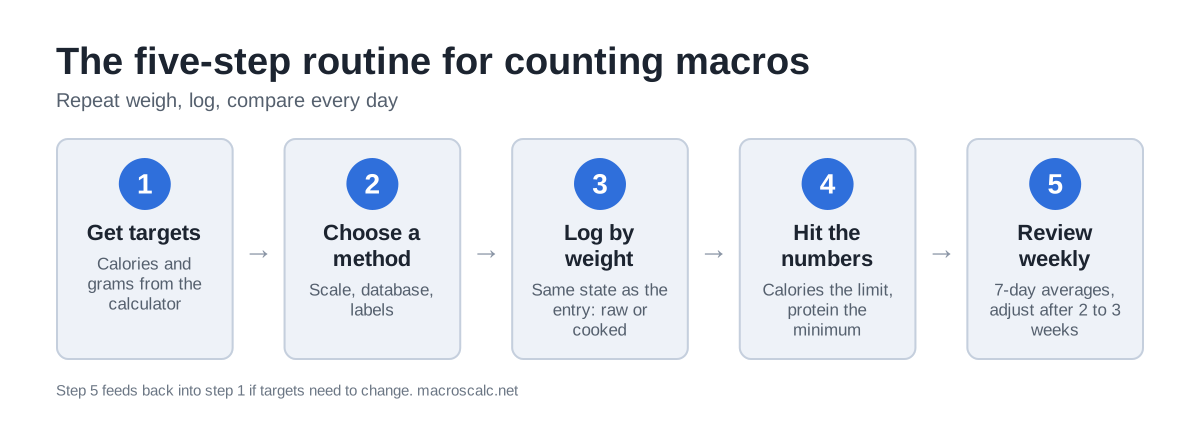
This guide on how to count macros gives the five-step routine and a full day log with the grams of every food. It then shows the same day with common logging errors, to see how far they skew the totals. A table of tracking mistakes closes the practical part. If you do not have targets yet, get them from the free macro calculator first.
How to Count Macros: The Five-Step Routine
How to count macros is a routine, not a skill you have to be good at. You set a target once, then repeat the same short cycle each day: weigh, log, compare. Most of the accuracy comes from consistency, so a simple method you keep using beats a precise one you abandon.
The five steps below assume you already know what the three macros are. If not, what are macros covers the basics in a few minutes, and this page does not repeat them.
Step 1 of How to Count Macros: Get Your Targets
Start with a daily calorie target and grams of protein, carbohydrate and fat. The macro calculator produces all four from your age, height, weight, activity and goal. How to calculate macros shows the arithmetic if you want to check it by hand. If your goal is fat loss, macros for weight loss explains how to choose the rate.
Step 2 of How to Count Macros: Choose a Method
There are three practical methods. A digital food scale in grams is the most accurate. A food-logging app or database makes lookups fast, and package labels are enough for packaged foods. Most people combine them: weigh ingredients on the scale and look the values up in a database such as USDA FoodData Central or on the label.
Step 3 of How to Count Macros: Log by Weight, in the Right State
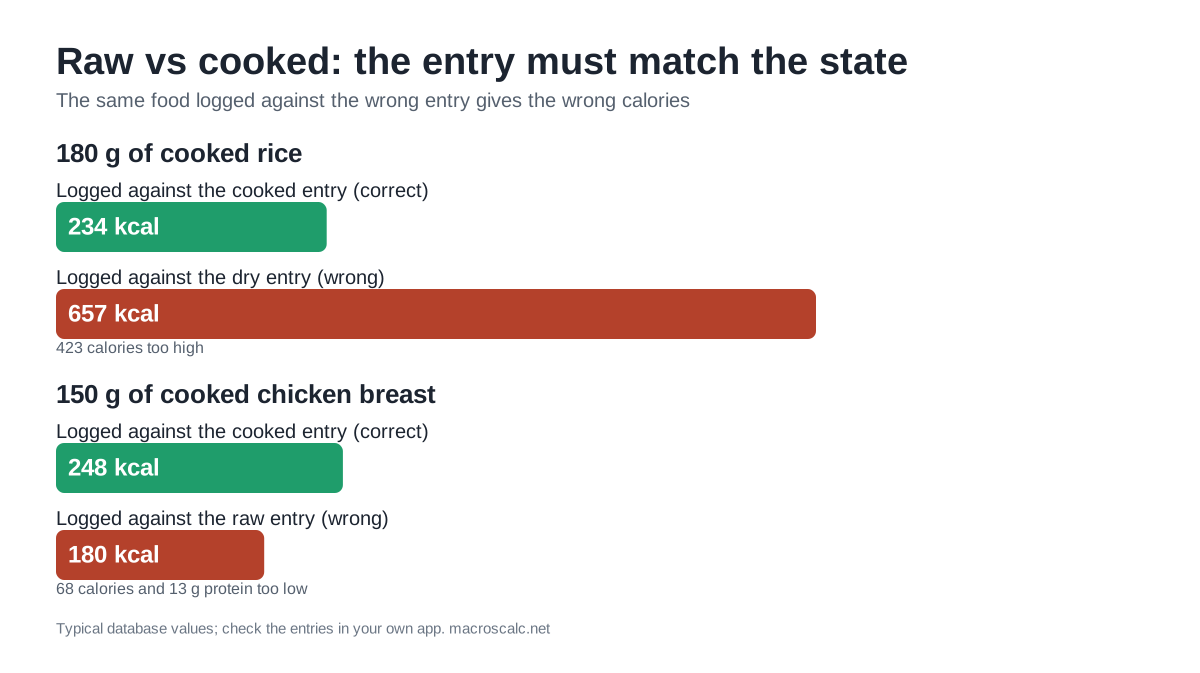
Weigh each food in grams and log it against an entry in the same state, raw or cooked. Rice, pasta and meat change weight in cooking, so the entries differ a lot. Prefer a generic or USDA-sourced entry over a user-submitted one. Log oils, sauces and drinks as their own items, and log a home-cooked recipe by its ingredients, not the finished dish.
Step 4 of How to Count Macros: Hit the Numbers, Roughly
Treat calories as the main limit and protein as a minimum. Carbohydrate and fat can trade places inside the calorie total, so landing a few grams over on one and under on the other does not matter. Close is good enough, because labels, databases and your own portioning all carry small errors.
Step 5 of How to Count Macros: Review Weekly
Counting well means looking past one day, because a single day tells you little. At the end of the week, average the calories and protein across the seven days. Compare them with your targets and with the 7-day average of your body weight. Adjust only after two or three weeks of consistent data, as covered below.
Beginner Tips
If you want to know how to count macros for beginners, start with these habits. Pre-log tomorrow’s meals the night before so you can fix gaps while you still have time. Eat a small set of repeat meals for the first two weeks to cut lookup work. Log as you eat rather than at night, since memory under-reports snacks and oil. Weigh in grams and use the scale’s tare button so the bowl does not count.
If you want flexibility in food choice, IIFYM explains how to fit foods to your targets.
How to Count Macros: A Full Day-Log Example
This worked example of how to count macros follows the reference profile from the weight-loss guide: a 70 kg woman with a target of 1,794 calories. The targets are 140 g protein, 196 g carbohydrate and 50 g fat. Every food is weighed in grams and logged against a USDA FoodData Central entry in the state shown, and the running total tracks calories as the day goes on.
Meal | Food (USDA entry, state) | Grams | Calories | Protein (g) | Carbohydrate (g) | Fat (g) | Running calories |
|---|---|---|---|---|---|---|---|
Breakfast | Oats, rolled, dry | 50 | 190 | 6.6 | 33.9 | 3.3 | 190 |
Breakfast | Greek yogurt, plain, nonfat | 300 | 177 | 30.6 | 10.8 | 1.2 | 367 |
Breakfast | Banana | 120 | 107 | 1.3 | 27.4 | 0.4 | 473 |
Lunch | Chicken breast, roasted, no skin | 150 | 248 | 46.5 | 0.0 | 5.4 | 721 |
Lunch | White rice, cooked | 180 | 234 | 4.8 | 50.7 | 0.5 | 955 |
Lunch | Broccoli, boiled | 100 | 35 | 2.4 | 7.2 | 0.4 | 990 |
Lunch | Olive oil | 5 | 44 | 0.0 | 0.0 | 5.0 | 1,034 |
Snack | Almonds | 25 | 145 | 5.3 | 5.4 | 12.5 | 1,179 |
Snack | Apple, with skin | 150 | 78 | 0.4 | 20.7 | 0.3 | 1,257 |
Dinner | Atlantic salmon, farmed, cooked | 120 | 247 | 26.5 | 0.0 | 14.8 | 1,504 |
Dinner | Lentils, boiled | 150 | 174 | 13.5 | 30.2 | 0.6 | 1,678 |
Dinner | Broccoli, boiled | 150 | 53 | 3.6 | 10.8 | 0.6 | 1,731 |
Dinner | Olive oil | 5 | 44 | 0.0 | 0.0 | 5.0 | 1,775 |
Day total | 1,775 | 141.5 | 197.1 | 50.0 | |||
Target | 1,794 | 140 | 196 | 50 |
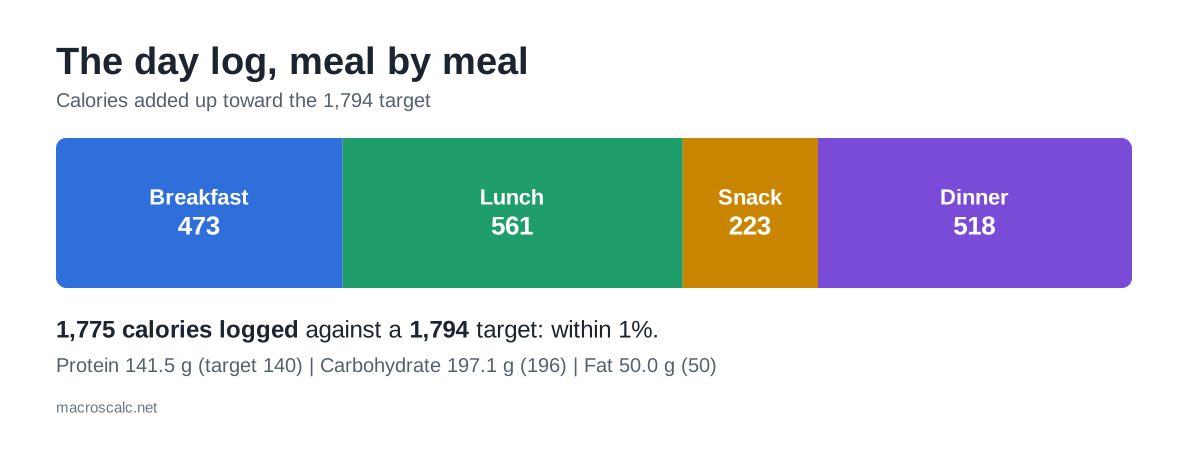
The day lands within 1% of the calorie target and within 2 g of each macro, which is closer than most real days. Protein is front-loaded across three sources, yogurt, chicken and salmon, which together supply about 104 g of the 141.5 g. The lunch and dinner oil is logged as its own line, which is the habit that keeps totals honest.
The row calories are rounded individually, so they sum to 1,776 against the true total of 1,775. A day log should match its stated total within rounding, and a spreadsheet or app will do this sum for you.
Example B: How to Count Macros When Logging Errors Creep In
Two common slips change the log without changing what was eaten. Suppose 10 g of cooking oil goes unlogged, which is 88 calories and 10 g of fat. Suppose also that the 150 g of cooked chicken is logged against the raw entry. That shows 180 calories and 33.8 g of protein instead of 248 and 46.5. The log now reads about 1,619 calories and 129 g of protein for a day that was really 1,775 and 141.5.
That is an under-count of about 156 calories, or 9%, every day. Over a week it adds up to roughly 1,090 calories, about a third of a pound by the usual 3,500-calorie rule. A 0.5 lb a week plan would look slower than it should. The mix-up can also run the other way. Logging 180 g of cooked rice against the dry entry shows 657 calories instead of 234, an over-count of 423.
Example C: How to Count Macros on a Flexible Day
Swap 100 g of the cooked rice for 15 g of olive oil. Calories barely move (+3), and protein drops by 2.7 g. Carbohydrate falls by 28.2 g and fat rises by 14.7 g. The day totals 1,778 calories, 138.8 g protein, 168.9 g carbohydrate and 64.7 g fat.
Protein is still within 2 g of target, so the day works for fat loss, and the trade is carbohydrate for fat. If you train hard, the lower carbohydrate may matter, which is why the choice is yours to make by how you feel and perform.
Is Counting Macros Worth It?
Counting macros gives you more control than counting calories alone. It makes protein intake visible, shows where your calories actually come from, and lets you adjust one macro without changing the whole plan. Those benefits help most when you have a specific goal such as fat loss or muscle gain.
It is not for everyone. Skip strict counting if you have a history of disordered eating, or if logging food raises anxiety. Skip it too if you are pregnant or managing a medical condition without professional guidance. If you only need a calorie target, you can skip macro tracking and log calories alone.
Tracking Macros: Macro-Friendly Foods and Alcohol
Tracking macros for real foods starts here: most foods contain more than one macro, so log by the label or database entry, not by food group. As a rough guide, meat, fish, eggs, dairy and legumes lean toward protein. Grains, fruit, potatoes and starchy vegetables lean toward carbohydrate. Oils, nuts, seeds and avocado lean toward fat.
Alcohol is not a macro but it supplies about 7 kcal per gram. Most trackers log it as calories without protein, carbohydrate or fat, so a drink can push the day’s calorie total above what the macro grams suggest.
Safety Notes
Counting safely depends on the person, because tracking food can be unhelpful for some people. If you have a history of disordered eating, or if logging makes you anxious, rigid or preoccupied with numbers, do not track macros, and speak to a doctor or registered dietitian. The same applies if you are pregnant or breastfeeding, under 18, or managing a medical condition such as diabetes or kidney disease, where targets should come from a clinician.
This page describes a method, not medical advice. Numbers in the examples are illustrations of how a log adds up, and every label, database and scale carries some error, so treat the totals as estimates.
Common Tracking Errors and How Large They Are
Most tracking errors are small individually and large together. The table gives the size of the common ones using the foods from the day log.
Error | Example | Size of the miss |
|---|---|---|
Cooking oil not logged | 1 tbsp (13.5 g) of olive oil | About 119 calories and 13.5 g of fat |
Raw and cooked mixed up | 180 g of cooked rice logged as dry rice | 423 calories too high |
Raw and cooked mixed up, the other way | 150 g of cooked chicken logged as raw | 68 calories and 13 g of protein too low |
Handful of nuts not logged | 28 g of almonds | About 162 calories and 14 g of fat |
Per-serving label read as per-pack | A 2.5-serving pack read as one serving | 60% too low on every macro |
Unreliable database entry | A user-submitted entry with typo values | Varies, so prefer generic or USDA entries |
Errors that run in opposite directions can hide each other. An unlogged tablespoon of oil adds 119 calories to the real day, while cooked chicken logged as raw removes 68, so two large mistakes can net out to a small one. Fix the largest and most repeated entries first, which in most logs means oils, drinks, nuts and the raw or cooked state of grains and meat.
How to Interpret Your Weekly Averages When Tracking Macros
How to track macros over a week comes down to reading a distribution, not a pass or fail. Suppose a week of daily calories reads 1,800, 1,750, 2,100, 1,780, 1,820, 1,700 and 2,300 against a target of 1,794. The average is 1,893, which is about 99 calories or 5.5% over, and almost all of the excess comes from two days, so the fix is to plan those days, not to cut the other five.
A miss matters when it repeats. One day 300 calories over changes little, but a weekly average that sits 5% over target for three weeks is enough to hide a half-pound-a-week deficit. Adjust the plan only after two or three weeks of data, change one thing at a time, and keep protein where it is.
How to Count Macros When It Is Not Working
When counting stops working, meaning the scale is flat or the numbers will not stay on target, work through the causes in order before changing the target. Most problems are logging problems, and a plateau is usually judged over two or three weeks of averages, not a few days.
If the log is accurate and the average weight has not moved for three weeks, trim calories by a small amount as described in macros for weight loss.
Comparison: Ways to Track Macros
Tracking can follow different methods, which differ in accuracy and effort, and most people mix them. The comparison below is general, with no specific app named.
How to count macros: method | Accuracy | Effort | Best for |
|---|---|---|---|
Food scale plus database | Highest | Highest | Hitting protein targets and diagnosing a stall |
Labels and database without a scale | Good for packaged food | Medium | Mostly packaged diets |
Measuring cups and spoons | Moderate; varies by food | Medium | Beginners without a scale |
Estimating by eye | Lowest | Lowest | Eating out or a short break from tracking |
No single method wins on every measure. Use the scale route when you need protein targets or a stall diagnosed, and the label-only route when most of your food is packaged. Pick the lightest method you will keep doing, and tighten it only if the weekly averages stop making sense.
FAQs
Conclusion
How to count macros is simple to state and takes a few weeks to make routine: get your targets, weigh food, log it in the right state, compare the day with the target and review the week. Consistency matters more than precision, and the full day log shows what a close, honest day looks like.
When you are ready, get your daily calories and grams from the free macro calculator, and use what are macros if any term is unclear. If tracking ever makes eating stressful, stop and choose a simpler approach.