Keto Macros Explained: Ratios and Grams for Each Macro
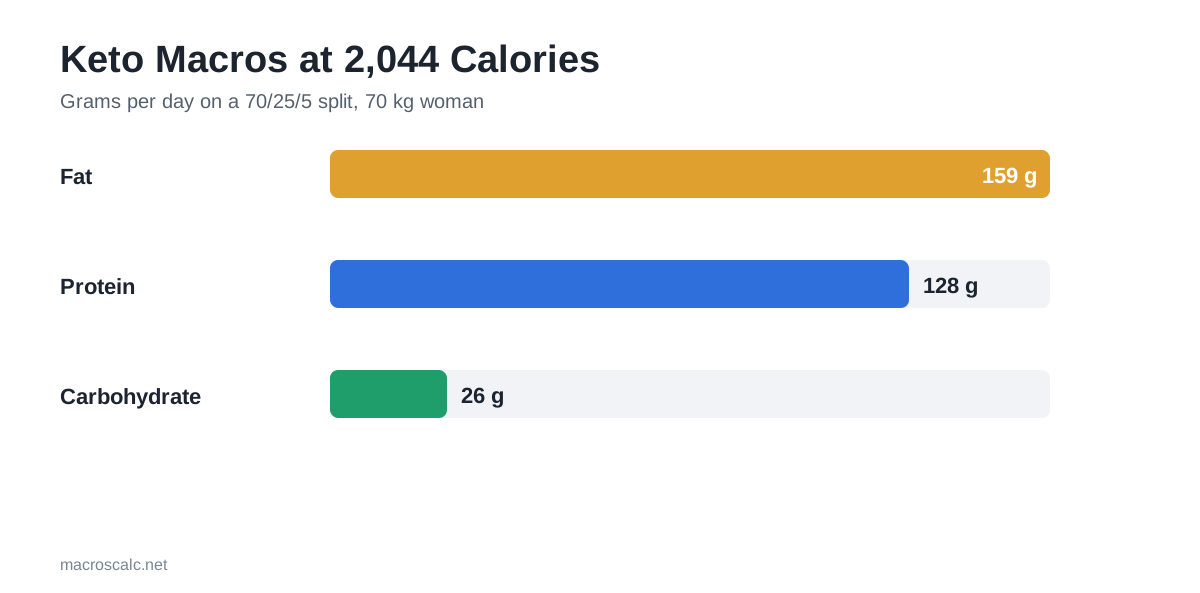
Macros for keto, often shortened to keto macros, are the daily targets for protein, carbohydrate and fat on a ketogenic diet: very low carbohydrate, high fat and moderate protein. A common starting split is 70% fat, 25% protein and 5% carbohydrate. At 2,044 calories that is 159 g fat, 128 g protein and 26 g carbohydrate. The carbohydrate figure is the one that decides whether the plan is keto at all.
This page converts the keto ratio into grams at several calorie levels. It also covers net carbs, why protein is not unlimited, a healthy keto plate and who should talk to a clinician first. For a personal plan, enter your calories in the free macro calculator and use the custom percentage inputs.
Macros for Keto: What the Ratio Means
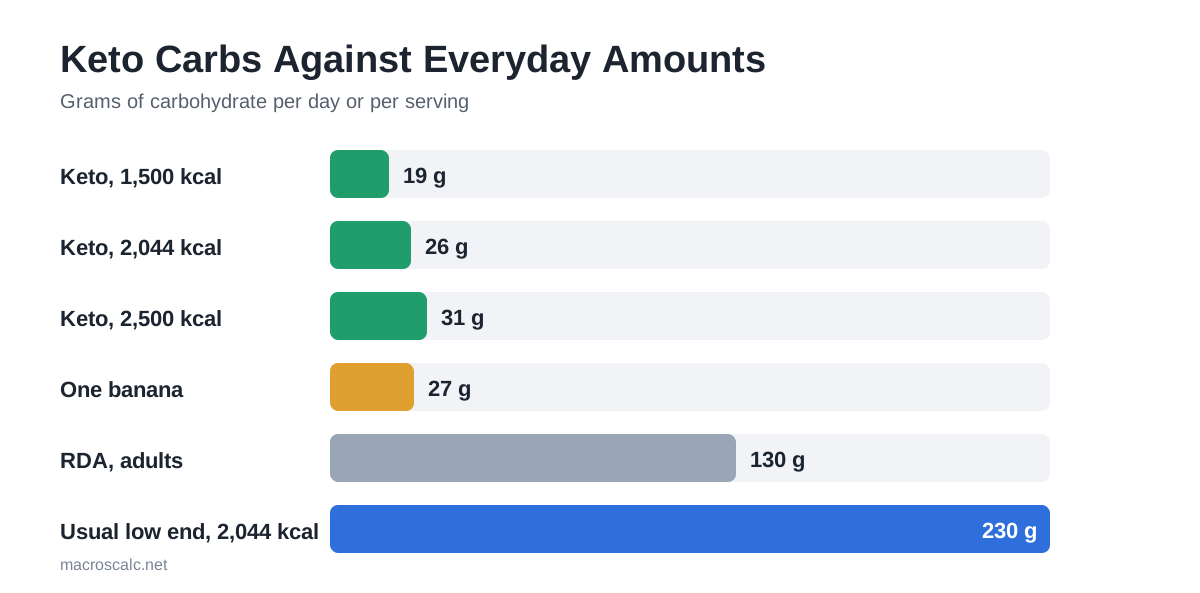
A ketogenic diet keeps carbohydrate low enough that the body relies more on fat and on ketones made from fat. Carbohydrate is usually held to about 20 to 50 g a day, which is a fraction of the 130 g RDA that the National Academies set for adults. That small carbohydrate budget is what makes macros for keto look so different from an ordinary plan.
In percentage terms, most keto plans fall between 60% and 75% fat, 15% to 30% protein and 5% to 10% carbohydrate. Protein and carbohydrate give 4 calories per gram and fat gives 9. That is why 70% of calories from fat is only about 159 g, far fewer grams than the same share from carbohydrate. The basics are covered in what are macros.
Treat the percentages in any set of macros for keto as a starting point, not a prescription. The carbohydrate gram limit and the protein gram target matter more than the exact split, and fat is whatever fills the remaining calories. A broader look at how splits work is in macro ratios explained.
Keto Macros in Grams at One Calorie Level
The table converts three common keto ratios to grams at 2,044 calories, the maintenance level of a 35-year-old woman at 165 cm and 70 kg with a moderate activity factor. Carbohydrate is fixed at 5% in every row of these macros for keto, so it stays at 26 g. Only the split between fat and protein changes.
Keto macro ratio (fat / protein / carbs) | Fat | Protein | Carbohydrate | Protein per kg |
|---|---|---|---|---|
65 / 30 / 5 | 148 g | 153 g | 26 g | 2.2 g/kg |
70 / 25 / 5 | 159 g | 128 g | 26 g | 1.8 g/kg |
75 / 20 / 5 | 170 g | 102 g | 26 g | 1.5 g/kg |
The 70/25/5 row is the usual starting point because it keeps protein near 1.8 g per kg. The 65/30/5 row raises protein to 2.2 g per kg and suits people who train hard. The 75/20/5 row is lower in protein and closer to a strict therapeutic style, which is a plan to set up with a clinician, not on your own.
Notice that moving 5% of calories between fat and protein changes grams by 25 g or so, while the carbohydrate figure never moves. That is why many people set carbohydrate first in grams and let the percentages follow.
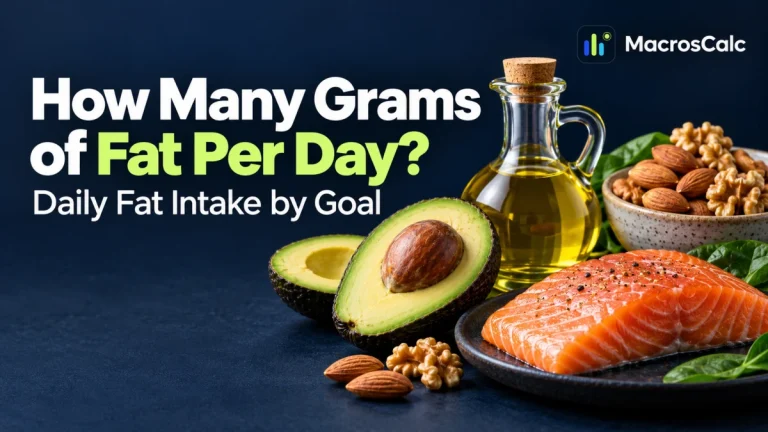
On a standard diet fat is a far smaller share, as how many grams of fat per day shows.
How to Calculate Keto Macros: Step by Step
The method sets carbohydrate first, then protein, and gives the rest to fat. This order is the opposite of an ordinary macro plan, because the carbohydrate limit is what defines the diet. The calorie step is the same as in how to calculate macros.
Here is the method on the 70 kg woman at 2,044 calories. Carbohydrate at 20 g is 80 calories, and protein at 1.6 g per kg is 112 g, or 448 calories. That leaves 1,516 calories for fat, which divided by 9 gives 168 g.
The result is 168 g fat, 112 g protein and 20 g carbohydrate, or roughly 74% fat, 22% protein and 4% carbohydrate. It is a slightly stricter plan than the 70/25/5 row, and both are valid macros for keto. The grams-first route also guarantees the protein target, which percentage splits can miss at low calories.
Net Carbs vs Total Carbs
Total carbohydrate is everything listed on the label under carbohydrate. Net carbs subtract fibre, because fibre passes largely undigested and does not raise blood glucose the way starch and sugar do. Some keto guides also subtract certain sugar alcohols, but the amounts vary, so counting fibre only is the cautious choice.
Half an avocado of about 100 g has roughly 9 g of carbohydrate and 7 g of fibre, which is about 2 g net. A banana has about 27 g of carbohydrate and 3 g of fibre, so it is about 24 g net and uses almost the entire day. This is why 26 g of carbohydrate is roughly one banana, and why vegetables do most of the work on a keto plate.
Pick one convention for your macros for keto and stay with it. If your limit is 26 g net, count fibre-adjusted carbohydrate across all foods. If you prefer the safety margin of total carbohydrate, set the limit near 30 g and ignore the fibre subtraction.
Protein on Keto: Why It Is Not Unlimited
Protein is moderate on keto because it supplies calories that would otherwise be fat, and because the body can convert some amino acids to glucose. The effect is smaller than often claimed, so keeping protein in the normal range is enough. There is no need to cut it below your body’s requirement.
Set protein by body weight, not by a percentage. A range of 1.2 to 2.0 g per kg suits most adults, which is 84 to 140 g for a 70 kg person. The reasoning behind the range is in how much protein per day.
Percentages in macros for keto can mislead at low calories. A 25% protein share of 1,500 calories is 94 g, which is 1.3 g per kg for a 70 kg adult and below the calculator default of 1.6 g per kg. The calculator flags that case. The fix is to raise protein in grams and reduce fat to compensate.
Worked Examples: Macros for Keto at Three Calorie Levels
These examples use the 70/25/5 split on the 70 kg woman from the examples above. Only calories change, so the table shows how grams scale. Carbohydrate stays between 19 and 31 g, which is the main point.
Calories | Fat | Protein | Carbohydrate | Protein per kg |
|---|---|---|---|---|
1,500 | 117 g | 94 g | 19 g | 1.3 g/kg, flagged |
2,044 | 159 g | 128 g | 26 g | 1.8 g/kg |
2,500 | 194 g | 156 g | 31 g | 2.2 g/kg |
At 1,500 calories the split gives 94 g of protein, which the calculator flags as below its default. At 2,500 calories the same split gives 156 g, which is within the usual range. Fat does the scaling, from 117 g to 194 g.
Carbohydrate moves by only 12 g across the whole range. That means food choice matters more than calories when you set macros for keto. A single piece of fruit or a serving of rice can consume the entire day’s allowance.
A Healthy Keto Plate
A keto plate can be built from food or from processed products, and the macros for keto can be identical. Whole foods give fibre, potassium and other nutrients that a plan built on bacon and cheese alone does not. Aim for most of the plate to be non-starchy vegetables, with a protein food and a fat source.
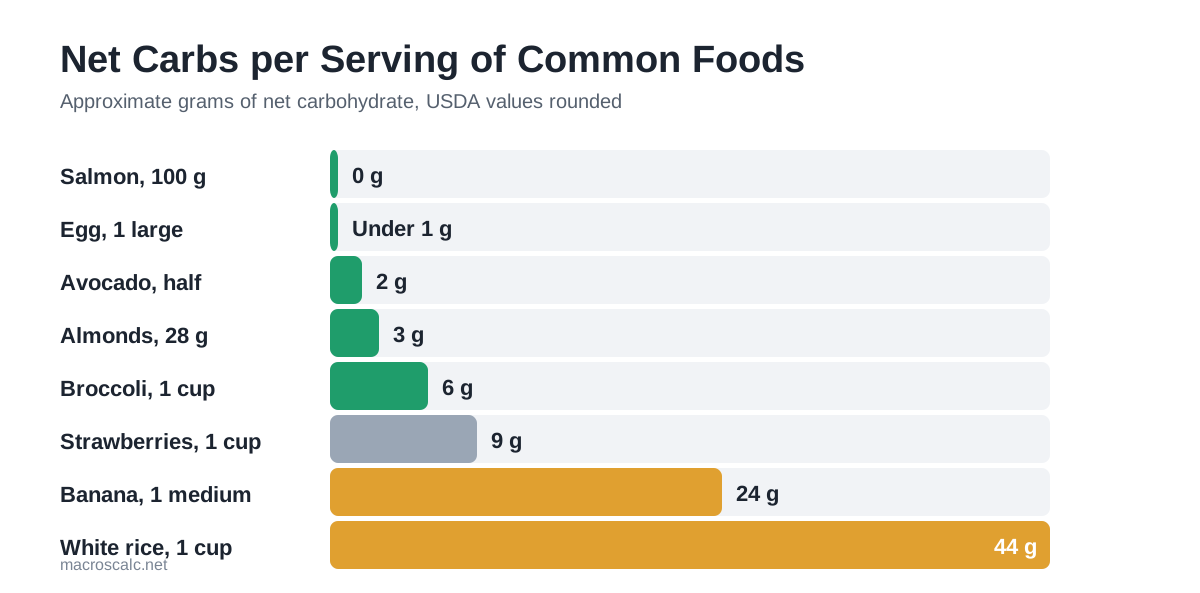
The table lists common keto foods with approximate net carbohydrate per serving. Values are rounded from USDA FoodData Central and vary by brand and preparation.
Food | Serving | Approx. net carbohydrate |
|---|---|---|
Salmon, cooked | 100 g | 0 g |
Egg, large | 1 egg | Under 1 g |
Avocado | Half, about 100 g | About 2 g |
Almonds | 28 g (1 oz) | About 3 g |
Broccoli, cooked | 1 cup | About 6 g |
Strawberries | 1 cup | About 9 g |
Banana | 1 medium | About 24 g |
White rice, cooked | 1 cup | About 44 g |
Build meals from the top of the table. A salmon fillet with broccoli and half an avocado, cooked in olive oil, uses about 8 g net carbohydrate and delivers protein, fat and fibre.
Risks, Side Effects and Who Should Not Self-Start Keto
A ketogenic diet is a large change, and the evidence on long-term outcomes is limited. It can work for short-term weight loss, but no macro split beats a plan you can keep up. The guidance below is for healthy adults. It is not medical advice.
Early Side Effects
The first week often brings tiredness, headaches and cramps, sometimes called the keto flu. Much of it comes from fluid and electrolyte losses as carbohydrate stores empty, so drinking enough and eating salted food helps. Constipation is also common, and non-starchy vegetables and nuts help with it.
Who Should Ask a Clinician First
Several groups should not start keto without medical advice. They include people with type 1 diabetes, people with type 2 diabetes who take insulin or other glucose-lowering drugs, and anyone on an SGLT2 inhibitor. The list also includes pregnant or breastfeeding women, people with kidney, liver, pancreas or gallbladder disease, teenagers, and anyone with a history of disordered eating.
If you take any prescription medication, check with a clinician or registered dietitian before you cut carbohydrate sharply. Medication doses can need adjusting. The calculator gives estimates and cannot replace individual advice.
How to Interpret Your Keto Numbers
Your macros for keto are a starting estimate. Track carbohydrate closely for the first two to three weeks, because small mistakes in portions add up fast. Protein and fat can be checked less often once the pattern is set.
Judge the result by energy, hunger and the weekly trend in weight, not by a single day. If weight does not move as planned, adjust calories by 100 to 150 before changing the split. If training suffers or you feel poorly for more than a few weeks, a higher-carbohydrate plan is a valid choice.
For people who want to go back to a moderate-carbohydrate pattern, how many carbs per day shows the grams by calorie level and goal.
FAQs
Conclusion
Macros for keto start from a carbohydrate limit of about 20 to 30 g, a protein target set by body weight and fat for the rest. At 2,044 calories the usual split is 159 g fat, 128 g protein and 26 g carbohydrate. Fat fills the remaining calories, so it is the macro that moves when calories change.
Use the macro calculator to turn your calories into grams, entering 70, 25 and 5 as custom percentages, and compare the result with the examples above. If you would rather read about other splits, see macro ratios explained.
Sources
The figures on this page come from the sources below and from USDA FoodData Central for food values. Check the originals if you plan to rely on a specific number, and speak to a clinician before changing a medical diet.
Every worked example was calculated with the same engine the macro calculator uses. The tool has no dedicated keto mode, so the examples use its custom percentage inputs.