Reverse Dieting: How It Works, Evidence and a Sample Ramp
Reverse dieting means raising calories gradually after a diet, instead of jumping straight back to normal eating. A typical ramp adds 50 to 100 calories a week until you reach maintenance. Protein stays fixed while carbohydrate and fat absorb the increase. The evidence that it repairs metabolism is thin, so treat it as a structured way to finish a diet.
This page shows how a ramp is built, what the research says and who might try it. It includes three sample ramps in grams, a weekly pace table and a guide to reading the scale. To start from your own maintenance level, use the free macro calculator in known-calories mode.

What Is Reverse Dieting?
Reverse dieting is a planned exit from a calorie deficit. After weeks or months of eating below maintenance, you raise calories in small weekly steps toward your estimated maintenance level instead of returning to it at once. The goal is a smoother transition and less rebound weight gain.
The idea comes from the observation that energy needs often fall during a diet. Resting energy use, daily movement and appetite hormones can all shift, a pattern called metabolic adaptation. The theory is that a slow ramp lets appetite and expenditure recover while you add food, but that part is unproven.
It is not the same as a refeed, which is a short break from a deficit, and it is not a way to keep losing weight. It is a way to finish a diet. The deficit side is covered in macros for weight loss.
How a Calorie Ramp Is Built
A ramp has four parts. You start from the calories you were eating at the end of the diet, add a small fixed amount each week and hold protein steady. You continue until you reach maintenance, then stop. The maintenance estimate comes from the method in BMR and TDEE, and BMR equations compares the formulas.
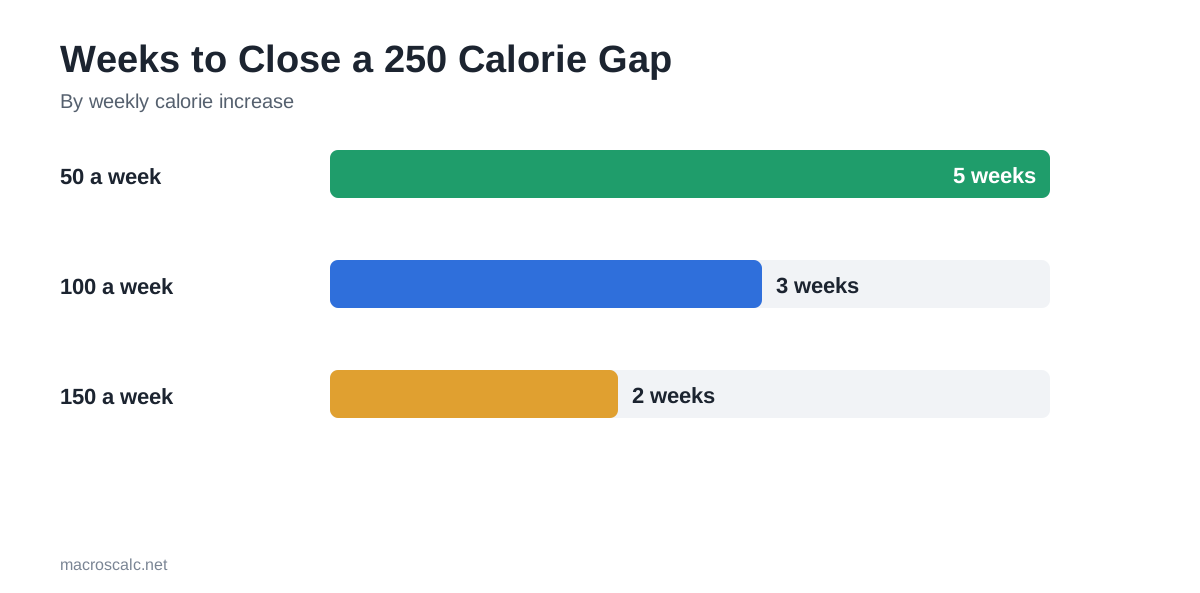
Guides disagree on pace. Cleveland Clinic describes 50 to 150 calories a week, and Healthline describes 50 to 100 calories a week for four to ten weeks. A smaller step is easier to manage and a larger step finishes sooner, but there is no evidence that one pace is better.
Pace | Weekly increase | Weeks to close a 250 calorie gap | Fits |
|---|---|---|---|
Slow | 50 calories | 5 weeks | People who gain weight easily or want a gentle exit |
Standard | 100 calories | 3 weeks | Most people finishing a moderate diet |
Faster | 150 calories | 2 weeks | Short, mild diets with a small gap |
Match the pace to the size of your deficit. A 250 calorie gap closes in a few weeks at 100 calories a week, while a 500 calorie gap needs about five. Use the table as a menu, not a prescription.
What the Evidence Says
The research base is thin. Major health sites describe the benefits as largely anecdotal, and Cleveland Clinic states that there is currently no research showing it boosts metabolism or keeps weight off. Most claims come from coaches and bodybuilders rather than controlled trials.
What is established is the problem it targets. Weight loss lowers energy needs, regain is common, and a gradual return to maintenance is a reasonable way to find out where maintenance now sits. One preliminary analysis of reverse dieting and weight regain after a caloric deficit is listed in the sources for readers who want to read it directly. Treat it as early evidence, not proof.
The practical reading is modest. A ramp gives a structure for finishing a diet and a checkpoint to find your real maintenance. It has not been shown to speed up metabolism or to prevent regain better than other careful approaches.
Who Should Try Reverse Dieting?
A ramp suits people who have dieted for a long time and want a structured exit. It also suits people who like clear weekly targets and are comfortable tracking food. Athletes finishing a contest diet are a common example.
Skip it if you are still working toward fat loss, if tracking feels stressful, or if you have a history of disordered eating. Small weekly changes can become an obsession for some people. Anyone with a medical condition should plan the end of a diet with a clinician or registered dietitian.
Risks and Downsides
The main downside is weight regain. Your scale weight will rise during a ramp, and some of that gain is fat if the ramp overshoots maintenance. The risk grows if maintenance is overestimated.
Other downsides are complexity and false hope. A ramp needs weekly tracking and decisions, and it can create the belief that a slow ramp prevents regain. It cannot. Calories at maintenance hold weight, whether you arrive by a ramp or a single step.
Ramps vs Refeeds, Diet Breaks and Plain Maintenance
Several strategies get confused with a ramp, and the differences affect how you plan. The table compares them by how long they last and what they change.
Approach | Duration | What changes | Evidence |
|---|---|---|---|
Reverse dieting | Weeks, until maintenance | Calories rise in small steps | Thin, mostly preliminary |
Refeed | One or two days | Carbohydrate rises briefly, deficit continues | Limited |
Diet break | One to two weeks | Calories return to maintenance, then the diet resumes | Some research on intermittent breaks |
Plain maintenance | Immediate | Calories return to maintenance at once | Simple, no ramp needed |
A plain return to maintenance is a valid choice, and many people use it. The practical gain from a ramp is that it spreads the scale gain over weeks and gives you checkpoints, which can make the change feel less abrupt. Pick the version you will follow consistently.
A Sample Reverse Dieting Plan: Three Profiles
These ramps use the calculator’s maintain goal in known-calories mode, with protein at 1.6 g per kg and fat at 30% of calories. Each starts after a diet and ends at maintenance. Protein stays fixed in all three.
Example A: Woman, 70 kg, Four-Week Ramp
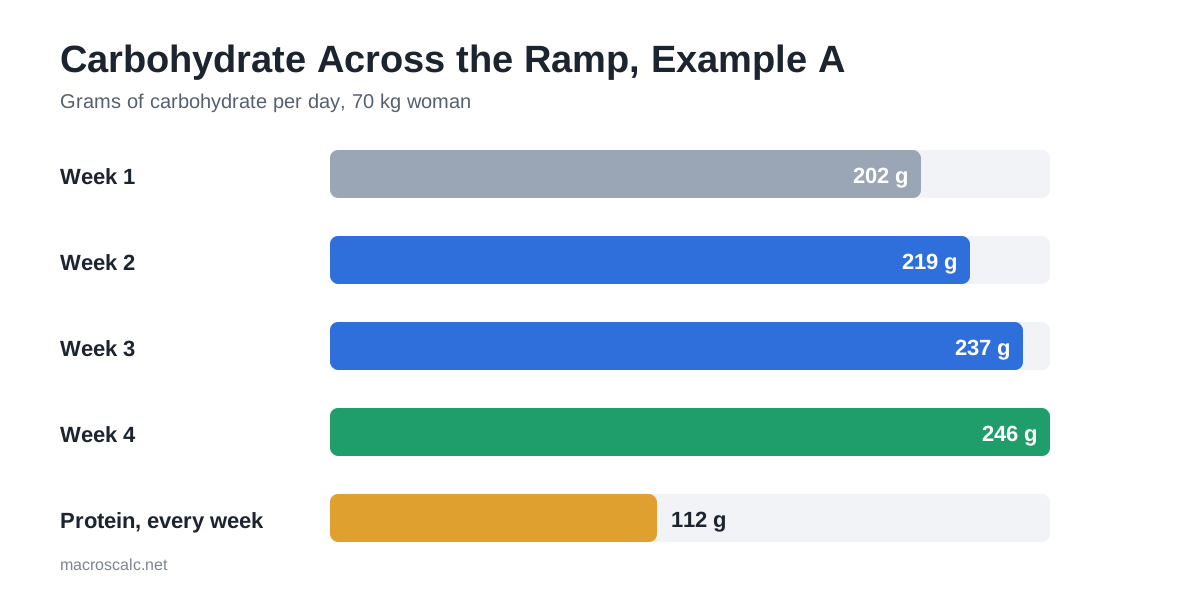
This woman has dieted at 1,794 calories, which is 250 below her 2,044 maintenance. She adds 100 calories a week and takes a final smaller step. Protein holds at 112 g while carbohydrate rises from 202 g to 246 g.
Week | Calories | Protein | Carbohydrate | Fat |
|---|---|---|---|---|
1 | 1,794 | 112 g | 202 g | 60 g |
2 | 1,894 | 112 g | 219 g | 63 g |
3 | 1,994 | 112 g | 237 g | 66 g |
4 | 2,044 | 112 g | 246 g | 68 g |
Carbohydrate takes about 70% of each calorie increase. That is a result of holding protein fixed and fat at 30% of calories. It also makes the ramp feel like more rice, oats and fruit, not more fat. Daily carbohydrate and fat ranges by calorie level are in how many carbs per day and how many grams of fat per day.
Example B: Man, 82 kg, Five-Step Ramp
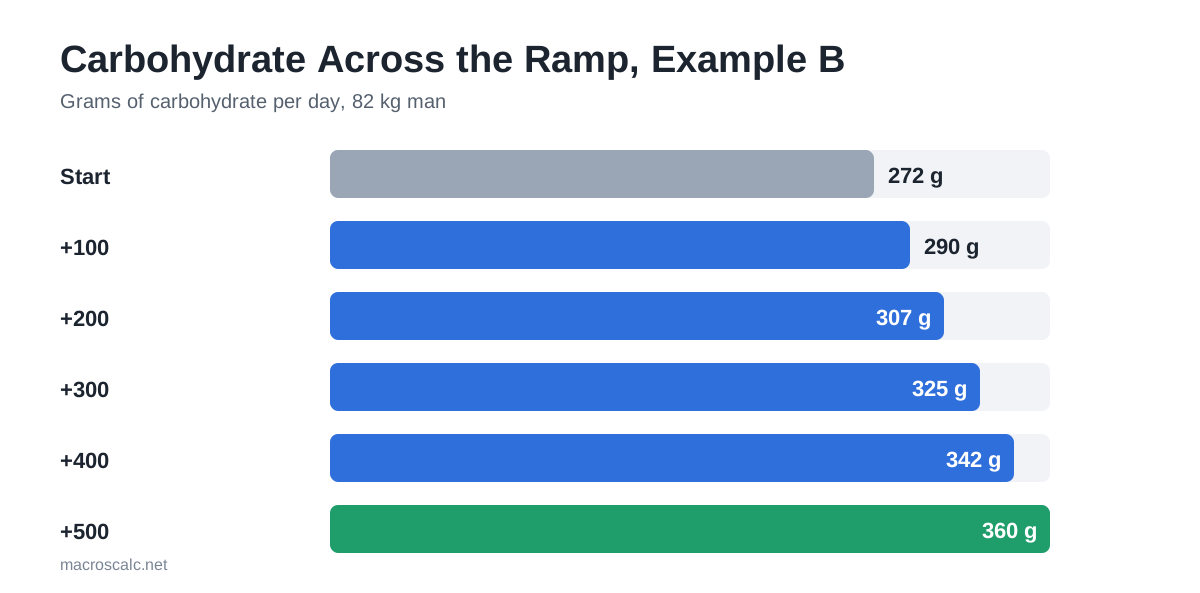
A 28-year-old man at 180 cm and 82 kg dieted at 2,306 calories and has a maintenance level of 2,806. Adding 100 calories a week closes the 500 calorie gap in five steps. Protein stays at 131 g, carbohydrate rises from 272 g to 360 g and fat from 77 g to 94 g.
Step | Calories | Protein | Carbohydrate | Fat |
|---|---|---|---|---|
Start | 2,306 | 131 g | 272 g | 77 g |
+100 | 2,406 | 131 g | 290 g | 80 g |
+200 | 2,506 | 131 g | 307 g | 84 g |
+300 | 2,606 | 131 g | 325 g | 87 g |
+400 | 2,706 | 131 g | 342 g | 90 g |
+500 | 2,806 | 131 g | 360 g | 94 g |
Example C: A Slow Ramp for the Same Woman
The same woman can use a slower ramp of 50 calories a week, which takes five steps instead of three. Carbohydrate rises from 202 g to 246 g in smaller increments of about 8 to 9 g, and fat rises from 60 g to 68 g. The slow pace gives more weeks to watch the scale.
Choose the slower version if your weight rises quickly during the first steps. The end point is the same maintenance estimate either way.
How to Interpret Weight Changes During the Ramp
Expect the scale to rise. Extra carbohydrate refills glycogen, and each gram of stored glycogen holds several grams of water. Food volume in the gut adds weight too. A gain of a pound or two in the first week or two is common and mostly water, not fat.
Judge the trend by the weekly average, not by single weigh-ins. Weigh most mornings, average each week and compare week with week. If the average keeps rising after the first two or three weeks, the increase is probably above your real maintenance.
Signal | What it suggests | Response |
|---|---|---|
Weekly average rises 1 to 2 lb then levels | Water and food volume | Continue the ramp |
Weekly average keeps rising after week 3 | Calories above real maintenance | Hold or step back 100 calories |
Weight steady, energy and training improve | Ramp is working | Continue to maintenance |
Hunger returns strongly | Step is too fast | Hold the current calories for a week |
Weight drops while eating more | Maintenance is higher than estimated | Continue and re-estimate |
When to Stop or Hold
Stop adding calories when your weekly average weight stops rising across two to three weeks. At that point you have found a working maintenance level, which may sit above or below the estimate. Hold there for a few weeks before you decide on the next goal.
Hold early if hunger, sleep or training suffer, or if weight climbs faster than 0.5% a week. A hold week costs nothing. After maintenance, you can start a new goal, such as macros for muscle gain or macros for body recomposition, or stay at maintenance. If you track, how to count macros keeps it simple.
FAQs
Conclusion
Reverse dieting is a gradual way to raise calories after a diet, usually by 50 to 100 a week, until you reach maintenance. Protein stays fixed, carbohydrate takes most of the increase and the weekly average weight tells you when to stop. The evidence for metabolic benefits is thin, so use it as a structure, not a promise.
To plan your own ramp, find your maintenance in the macro calculator and use known-calories mode for each step. If you want the deficit side first, see macros for weight loss.
Sources
The ramp rules on this page come from public health-site guidance, and the research is listed below. Check the originals if you plan to rely on a specific figure.
Every worked example was calculated with the same engine the macro calculator uses. The preliminary analysis below is listed for completeness, and its findings should not be read as settled.