What Are Macros in Food and Diet? Macronutrients Explained
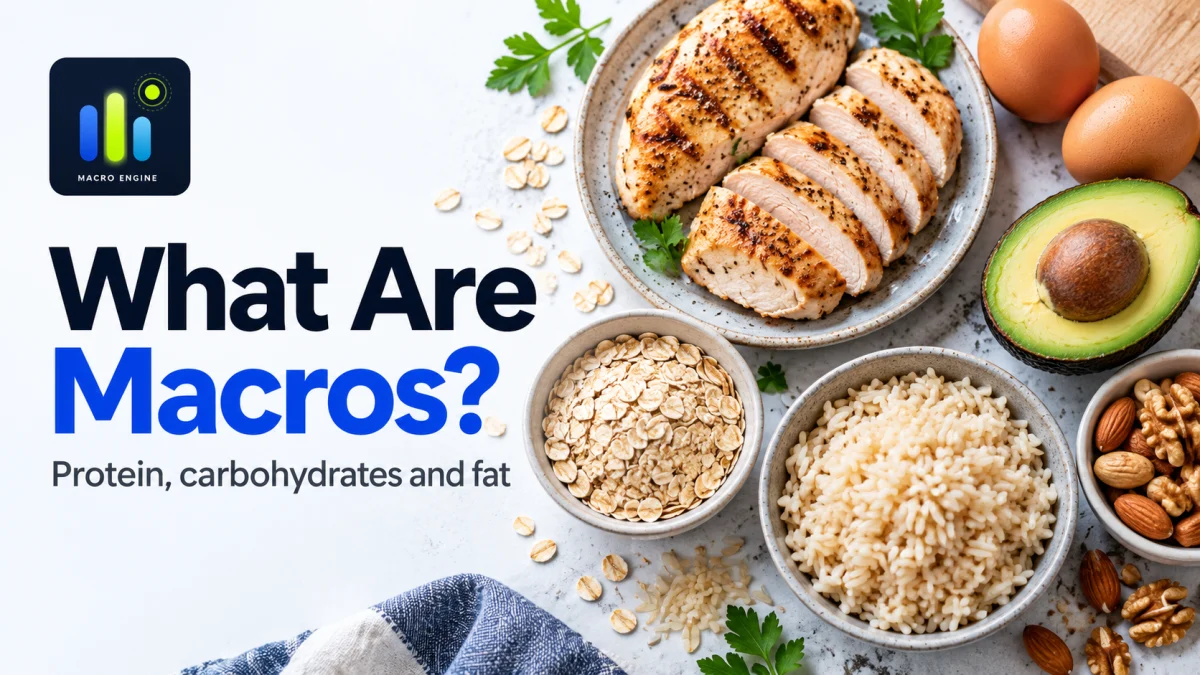
What are macros? Macros, short for macronutrients, are the three nutrients your body needs in large amounts: protein, carbohydrate and fat. Protein and carbohydrate each provide 4 calories per gram and fat provides 9, so every food’s calories come from some mix of the three. That mix is why two foods with the same calories can behave very differently in a diet.
The split matters because it changes how full you feel, how well you keep muscle and how much energy you have for training. This guide explains what each macro does, shows the numbers in everyday foods and covers when counting them is worth the effort. If you would rather get your own targets straight away, the free macro calculator gives them in grams.
What Are Macros? Definition and Calories per Gram
So what are macros? Macros are the macronutrients in food: protein, carbohydrate and fat. What are macronutrients, then? They are the nutrients you need in grams a day, as opposed to micronutrients such as vitamins and minerals, which you need in milligrams or micrograms. When people ask what are macros in diet terms, or want the macros meaning in a diet, they usually mean the daily grams of each of the three that they aim to eat.
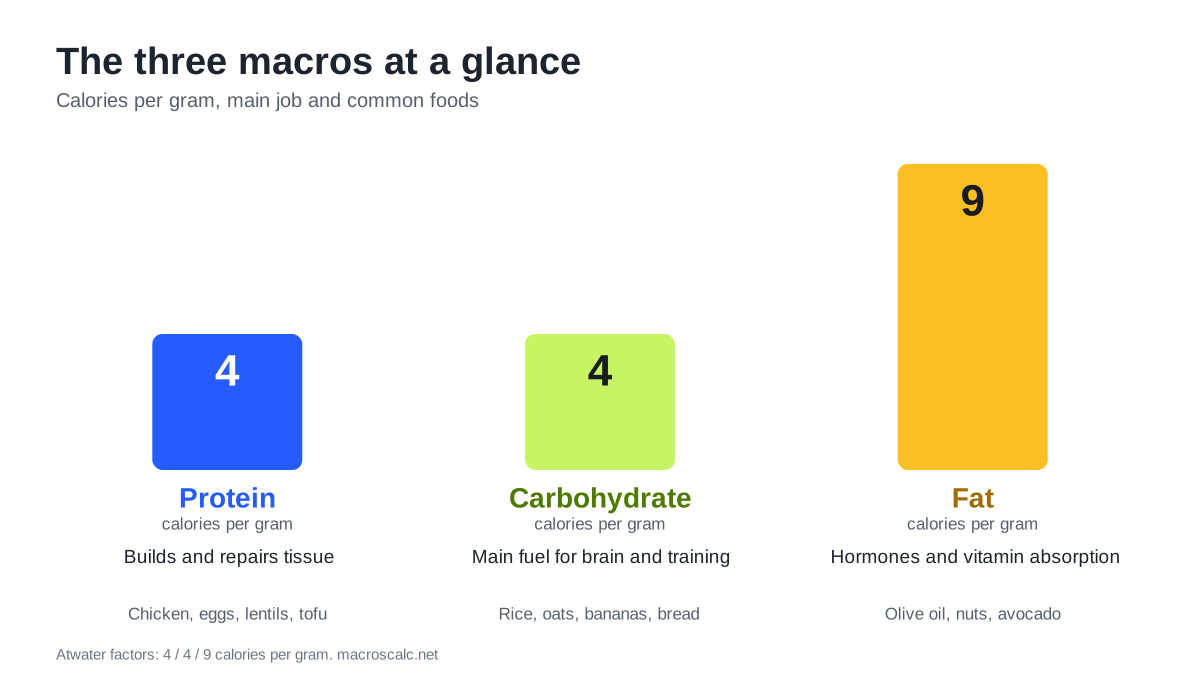
Each macro carries a fixed energy value, known as an Atwater factor: 4 calories per gram for protein, 4 for carbohydrate and 9 for fat. Alcohol provides 7 calories per gram but is not counted as a macro. A portion with 20 g of protein, 30 g of carbohydrate and 10 g of fat holds 80 + 120 + 90 = 290 calories. That is how a label’s calorie figure is built.
Macro | Calories per gram | Main job | Example foods |
|---|---|---|---|
Protein | 4 | Builds and repairs tissue, makes enzymes and hormones | Chicken, eggs, lentils, tofu |
Carbohydrate | 4 | Main fuel for the brain and for training | Rice, oats, bananas, bread |
Fat | 9 | Supports hormones, absorbs vitamins A, D, E and K, stores energy | Olive oil, nuts, avocado |
What Are Macronutrients For? The Job of Each Macro
What are macros doing in the body? Each macro has a job the others cannot fully cover, which is why a diet built on one of them alone tends to fail. Protein repairs and builds tissue, carbohydrate fuels activity and fat supports hormones and the absorption of fat-soluble vitamins.
The National Academies set Acceptable Macronutrient Distribution Ranges for adults. They are 45 to 65% of calories from carbohydrate, 20 to 35% from fat and 10 to 35% from protein (Institute of Medicine, Dietary Reference Intakes, 2005). The ranges are wide on purpose, so most healthy eating patterns fit inside them.
Protein
Protein supplies the amino acids your body uses to build muscle, enzymes and immune cells. The adult Recommended Dietary Allowance is 0.8 g per kg of body weight. Position stands for people who train hard put the useful range higher, at about 1.4 to 2.0 g per kg (Jäger et al., J Int Soc Sports Nutr 2017;14:20). Chicken, eggs, fish, Greek yogurt, lentils and tofu are common sources. Animal proteins contain all nine essential amino acids, and plant sources can cover them when you eat a variety.
Carbohydrate
Carbohydrate covers sugars, starches and fibre, and it is the body’s preferred fuel for high-intensity exercise and for the brain. Rice, oats, potatoes, bread, fruit and beans are the usual sources. Fibre is a carbohydrate your body digests only in part, so it adds fewer calories than starch, and most people eat less of it than they need.
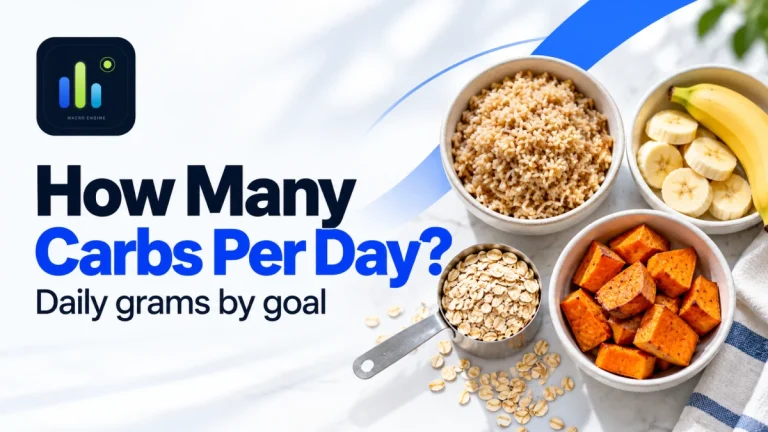
Carbohydrate comes as simple sugars, complex starches and fibre. Whole foods that keep their fibre digest slowly, while refined starch and added sugar digest quickly. The how many carbs per day guide gives grams by calorie level and goal, plus the simple vs complex carbs difference.
Fat
Fat is the most energy-dense macro at 9 calories per gram, and it supplies the essential fatty acids linoleic and alpha-linolenic acid, which your body cannot make. Olive oil, nuts, seeds, avocado, oily fish and eggs are common sources. A very low fat intake can interfere with hormone production and with absorbing vitamins A, D, E and K. A floor matters as much as a ceiling.
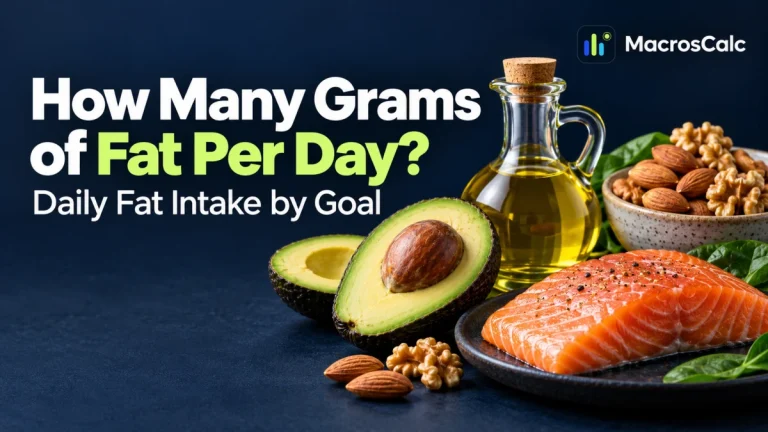
Fat comes as unsaturated, saturated and trans fat, and the guidance differs for each. Olive oil, nuts and fish supply mostly unsaturated fat, while butter, cheese and fatty meat carry more saturated fat. The how many grams of fat per day guide turns the 20% to 35% range into grams and sets saturated fat limits.
What Are Macros in Everyday Foods?
What are macros in food? They are the grams of protein, carbohydrate and fat on the label, and most foods contain more than one, so the useful question is which one dominates. Chicken breast is almost all protein, rice is almost all carbohydrate, and olive oil is pure fat. An egg or a banana shows how mixed real foods are. The table below uses USDA FoodData Central values for common portions.
The calories in the table do not always equal 4 x protein + 4 x carbohydrate + 9 x fat exactly. USDA uses food-specific energy factors. A food can therefore differ by a few calories from the simple 4 / 4 / 9 sum, which is normal and not an error in the label. Salmon, lentils and whole milk show how often one food carries all three macros.
What are macros in food (portion) | Calories | Protein (g) | Carbohydrate (g) | Fat (g) |
|---|---|---|---|---|
Chicken breast, roasted, no skin (100 g) | 165 | 31 | 0 | 3.6 |
White rice, cooked (100 g) | 130 | 2.7 | 28 | 0.3 |
Olive oil (1 tbsp, 13.5 g) | 119 | 0 | 0 | 13.5 |
Egg, whole (1 large, 50 g) | 72 | 6.3 | 0.4 | 4.8 |
Banana (1 medium, 118 g) | 105 | 1.3 | 27 | 0.4 |
Avocado, raw (100 g) | 160 | 2.0 | 8.5 | 14.7 |
Almonds (1 oz, 28 g) | 164 | 6.0 | 6.1 | 14.2 |
Salmon, Atlantic, farmed, cooked (100 g) | 206 | 22.1 | 0 | 12.4 |
Lentils, cooked (1 cup, 198 g) | 230 | 17.9 | 39.9 | 0.8 |
Whole milk (1 cup, 244 g) | 149 | 7.7 | 11.7 | 7.9 |
Source: USDA FoodData Central (SR Legacy entries). Values are rounded.
What Are Macros on a Label? Common Reading Mistakes
Labels list a serving, not the whole pack, so a tub with 2.5 servings holds 2.5 times the numbers printed. Three other slips come up often:
What Are Macros Used For? Goals and Targets
Macros turn a vague goal into a daily number. Someone cutting body fat sets a calorie deficit and a protein target high enough to protect muscle, and someone building muscle does the same with a surplus. The macros for weight loss guide shows how to set those numbers step by step.
The second answer to what macros are for is flexibility. Once protein is covered, carbohydrate and fat can trade places according to taste, training and appetite. The same calorie total can be met with a rice-heavy day or a nut-and-olive-oil day. Counting is the habit that makes this work, and how to count macros explains the routine.
Should You Count Macros? Pros and Cons
What do you gain when you count them? Counting works best when you have a specific target, such as hitting a protein number or fixing a stalled cut. It shows you where your calories come from, which most people estimate badly. It also makes trade-offs visible: a handful of nuts costs about as many calories as a large plate of vegetables.
It is not for everyone. Logging every meal takes time, label and database errors add noise, and a strict habit can turn into an unhealthy preoccupation with food in people prone to it. If tracking raises anxiety or leads to restrictive eating, stop and speak to a doctor or registered dietitian. Consider simpler habits such as a protein-first plate and consistent portions.
Macros vs Micronutrients
How do macros compare with micronutrients? Macros are the nutrients you eat in gram quantities and that supply calories: protein, carbohydrate and fat. Micronutrients are vitamins and minerals, needed in far smaller amounts and providing no calories.
Both matter, but they are tracked differently. Macros are set as daily gram targets. Micronutrients are usually covered by eating a varied diet, which is why food quality still matters when you hit your macro numbers.
How to Interpret Your Own Macro Numbers
How do macros work as targets? They come in two forms that mean the same thing. One is grams a day, such as 150 g of protein, and the other is a percentage of calories, such as 30% protein. Grams are what you log, and percentages describe the balance. To move from one to the other, multiply grams by the calories per gram and divide by your calorie total.
The macro calculator does the full calculation for you, and how to calculate macros walks through the steps by hand. The examples below show how to read the output.
How to Calculate and Track Your Macros
To turn the ideas above into targets, you estimate your calorie needs and split them into protein, carbohydrate and fat. The how to calculate macros guide shows each step with worked numbers, and the macro calculator does the same arithmetic for you.
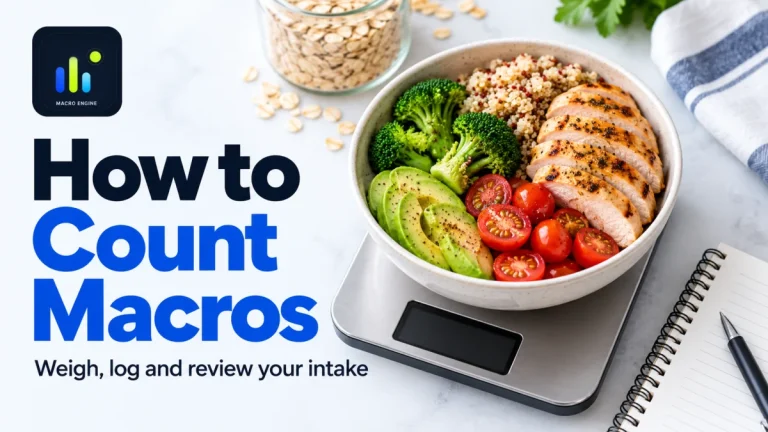
Tracking is the second half. The how to count macros guide covers logging food and checking the daily total. If you are unsure whether grams or calories matter more, the FAQ below covers it.
Worked Examples
The three examples below answer “what are macros?” with real arithmetic you can repeat with any food or day. Each one turns grams into calories with the 4 / 4 / 9 factors and then reads what the result means.
None of them needs a tool, only a calculator and a label. If you want the same arithmetic done for your own body and goal, use the macro calculator.
Example 1: What Are Macros in One Day of Eating?
A day logs 120 g of protein, 220 g of carbohydrate and 65 g of fat. Calories are 120 x 4 + 220 x 4 + 65 x 9 = 480 + 880 + 585 = 1,945. The shares are 25% protein, 45% carbohydrate and 30% fat, so the day sits inside the National Academies ranges.
The reading is simple: carbohydrate supplies the largest share of energy, and protein is moderate. Raising protein to 150 g would add 120 calories, so you would trim carbohydrate or fat by about the same amount to keep the total.
Example 2: The Same 2,000 Calories, Two Splits
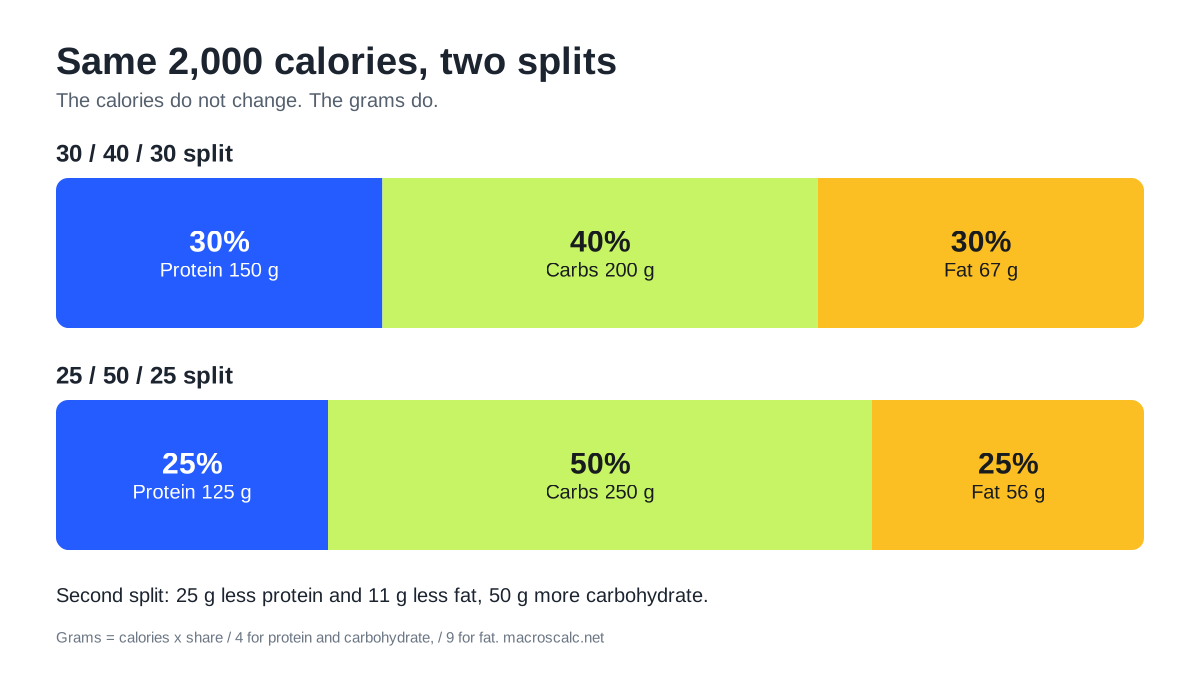
At 30/40/30 (protein / carbohydrate / fat), 2,000 calories gives 600 / 800 / 600 calories. That is 150 g of protein, 200 g of carbohydrate and 67 g of fat. At 25/50/25 it gives 500 / 1,000 / 500 calories, which is 125 g, 250 g and 56 g.
The calorie total is identical, but the second split swaps 25 g of protein and 11 g of fat for 50 g of carbohydrate. Choose by appetite and training: more carbohydrate suits long or intense sessions, and more protein tends to help fullness.
Example 3: What Are Macros on a Yogurt Label?
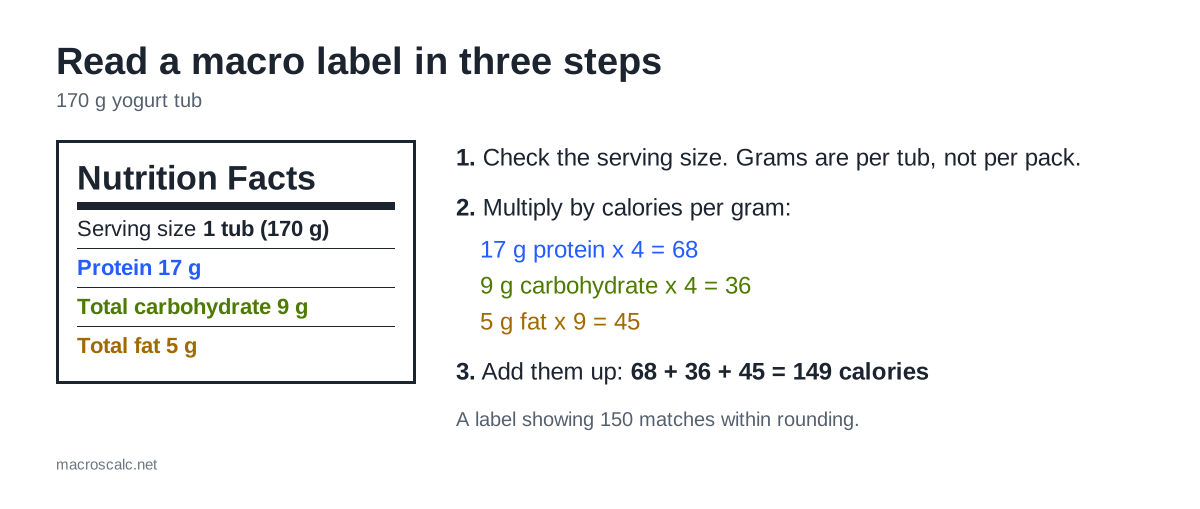
A 170 g tub lists 17 g of protein, 9 g of carbohydrate and 5 g of fat. The calories are 17 x 4 + 9 x 4 + 5 x 9 = 68 + 36 + 45 = 149. Protein supplies 46% of those calories, carbohydrate 24% and fat 30%.
If the label shows 150 calories, it matches within rounding. If it shows a figure far from the sum, check whether the grams are per serving or per pack, because that is the usual cause.
Safety Notes
This page answers the question “what are macros?” and is not medical advice. The ranges quoted are for healthy adults, and people with diabetes, kidney disease, pregnancy, an eating disorder or another medical condition should get macro targets from a doctor or registered dietitian.
No number on this page is a prescription. Calorie and macro figures are estimates, labels are rounded, and individual needs vary with size, age, activity and health, so treat every target as a starting point and adjust it against real results.
Common Macro Mistakes and How to Fix Them
Most errors come from the same few places: units, portion sizes and the difference between a target and a limit. The table lists the ones that show up most often.
Mistake | Why it happens | Fix |
|---|---|---|
Calling macros and calories the same thing | Both appear on every label | Calories measure energy; macros are the three nutrients that supply it |
Using the 4 / 4 / 9 factors for fibre or alcohol | Fibre counts as carbohydrate and alcohol has 7 calories per gram | Use the label’s calories and treat alcohol separately |
Logging raw weight for cooked food | Rice and meat change weight when cooked | Weigh and log in the same state as the database entry |
Reading a percentage as grams | 30% protein sounds like 30 g | Convert: calories x share / 4 for protein and carbohydrate, / 9 for fat |
Treating the AMDR as a target | The ranges are wide | Pick a point inside the range that fits your goal and appetite |
The fix is usually a unit or a state to correct, not more discipline. Most of the damage comes from two habits: treating a wide range as a target, and mixing raw and cooked entries. Once those are settled, the remaining errors are small enough to average out over a week.
Macros vs Micronutrients vs Calories
How do macros, micronutrients and calories differ? These three terms are often mixed up, so the comparison below keeps them apart. Calories are a measure of energy, macros are the nutrients that supply most of it, and micronutrients are the vitamins and minerals that supply none.
Term | What it is | Unit | Examples |
|---|---|---|---|
Calories | Energy in food | kcal | 165 per 100 g of roasted chicken breast |
Macros | Protein, carbohydrate, fat | grams | 31 g protein per 100 g of roasted chicken breast |
Micronutrients | Vitamins and minerals | mg or mcg | Iron, vitamin C, calcium |
In practice, calories are the budget, macros are how the budget is spent, and micronutrients are the quality check. A day can hit its calories and macros and still fall short on iron or vitamin D, which is why food variety matters beyond the grams.
FAQs
Conclusion
What are macros? They are the protein, carbohydrate and fat that supply the calories in your food, measured in grams and worth 4, 4 and 9 calories per gram. Knowing the split helps you read labels, set protein targets and trade carbohydrate and fat according to your goal and appetite.
After “what are macros?”, the next question is your own numbers: the free macro calculator turns your age, height, weight and activity into daily grams, and how to count macros shows how to track them without overdoing it.